Professional B2B Website Design That Drives Growth 24/7
Custom digital platforms for Bay Area B2B companies that establish authority, streamline lead generation, and transform prospects into long-term partnerships
Best B2B Company Websites: Bay Area Examples That Convert Decision-Makers Into Customers
B2B company websites face a conversion challenge that consumer products never encounter: the person landing on the site rarely holds the budget authority, the purchase involves multiple stakeholders with different concerns, and the sales cycle can stretch from weeks to months. The best B2B websites in the Bay Area solve this challenge through precision positioning, deep product architecture that speaks to both the technical evaluator and the executive buyer, and social proof strategies calibrated for the sophisticated procurement processes of enterprise and mid-market clients. The California companies below demonstrate how Bay Area B2B startups and scale-ups build digital presence that drives pipeline at every stage of the buying journey.
Anvil
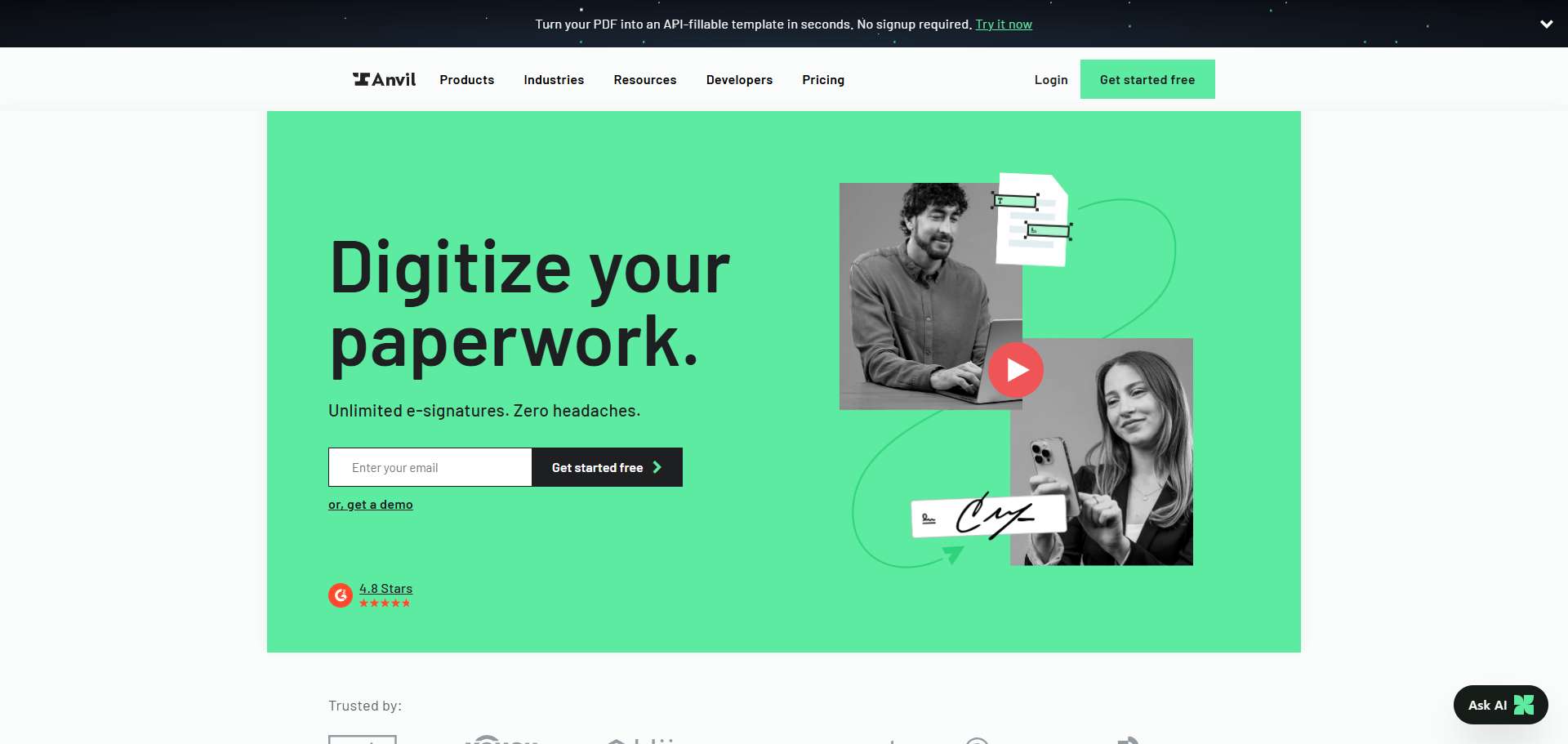
Anvil — the San Francisco document automation platform serving insurance, HR, real estate, and legal industries — leads with an interactive product demo that is among the most effective B2B conversion tools deployed on any Bay Area SaaS website: “Turn your PDF into an API-fillable template in seconds. No signup required. Try it now.” This above-the-fold product experience converts passive website visitors into active product evaluators before a single sales conversation, compressing the traditional B2B evaluation timeline by giving technical buyers exactly what they need — a hands-on experience with the product’s core capability — without requiring them to book a demo or provide an email address first. The product architecture communicates the full scope of the Anvil platform across six distinct capabilities: Workflows, Etch E-sign, PDF Services, Webforms, Document AI, and OCR Service — each positioned as a building block that enterprises can adopt individually or combine into a comprehensive document automation stack. The industry vertical navigation — Insurance, Human Resources, Real Estate, Legal, and more — ensures that each buyer type arrives at content that speaks directly to the specific document workflows, compliance requirements, and integration environments of their sector. The Document AI product, highlighted as a “Faster way to build workflows,” signals Anvil’s investment in the AI automation capabilities that enterprise buyers are actively prioritizing in their technology evaluations. The no-signup required PDF demo is a calculated top-of-funnel strategy that generates product qualified leads rather than marketing qualified leads — visitors who have experienced the product’s value before the first sales touchpoint.
Peregrine
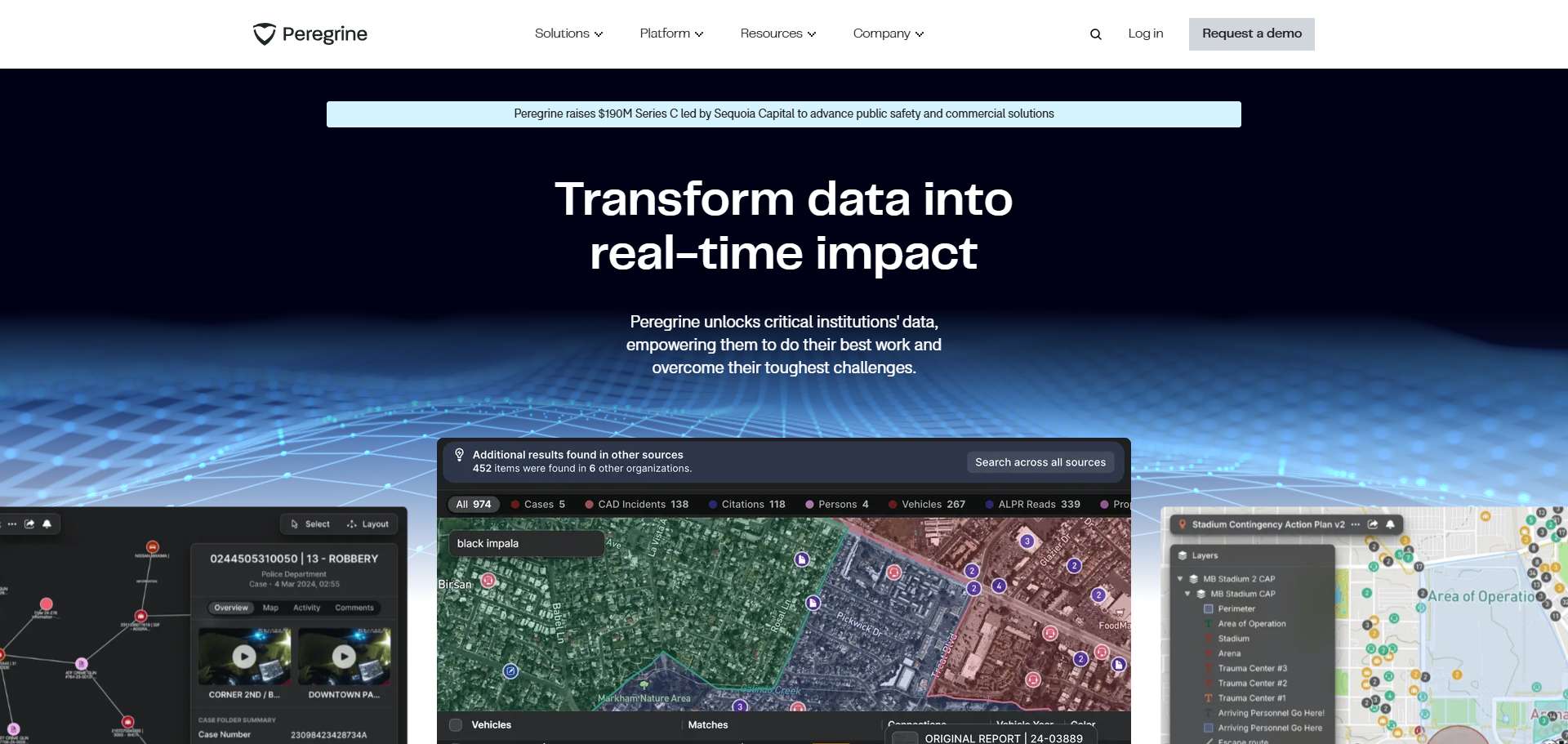
Peregrine — the San Francisco data intelligence platform for public safety and critical institutions, backed by $190 million in Series C funding from Sequoia Capital at a $2.5 billion valuation — operates a B2B website built around one of the most mission-critical value propositions in enterprise software: the ability to transform siloed institutional data into real-time operational intelligence for agencies that cannot afford information gaps. The homepage headline — “Transform data into real-time impact” — is precise in a way that generic data platform messaging rarely achieves, communicating both the input (existing institutional data) and the output (real-time operational impact) without requiring the visitor to decode technical jargon. The lead news item — the $190M Series C from Sequoia — functions as the site’s primary credibility signal, communicating to government procurement officers, agency directors, and institutional technology leaders that Peregrine has the capitalization, investor validation, and growth trajectory of a platform investment rather than a point solution. The three-capability visualization — cross-system search, comprehensive plan construction, and synchronized team operations — demonstrates the product’s operational workflow in the specific language of incident command and public safety operations, signaling to law enforcement and emergency management buyers that this platform was built with deep domain expertise rather than adapted from a commercial data tool. For B2B companies serving government and institutional clients, Peregrine’s combination of mission-driven headline, Sequoia-backed credibility, and operationally specific product demonstration sets a high standard.
Topsort
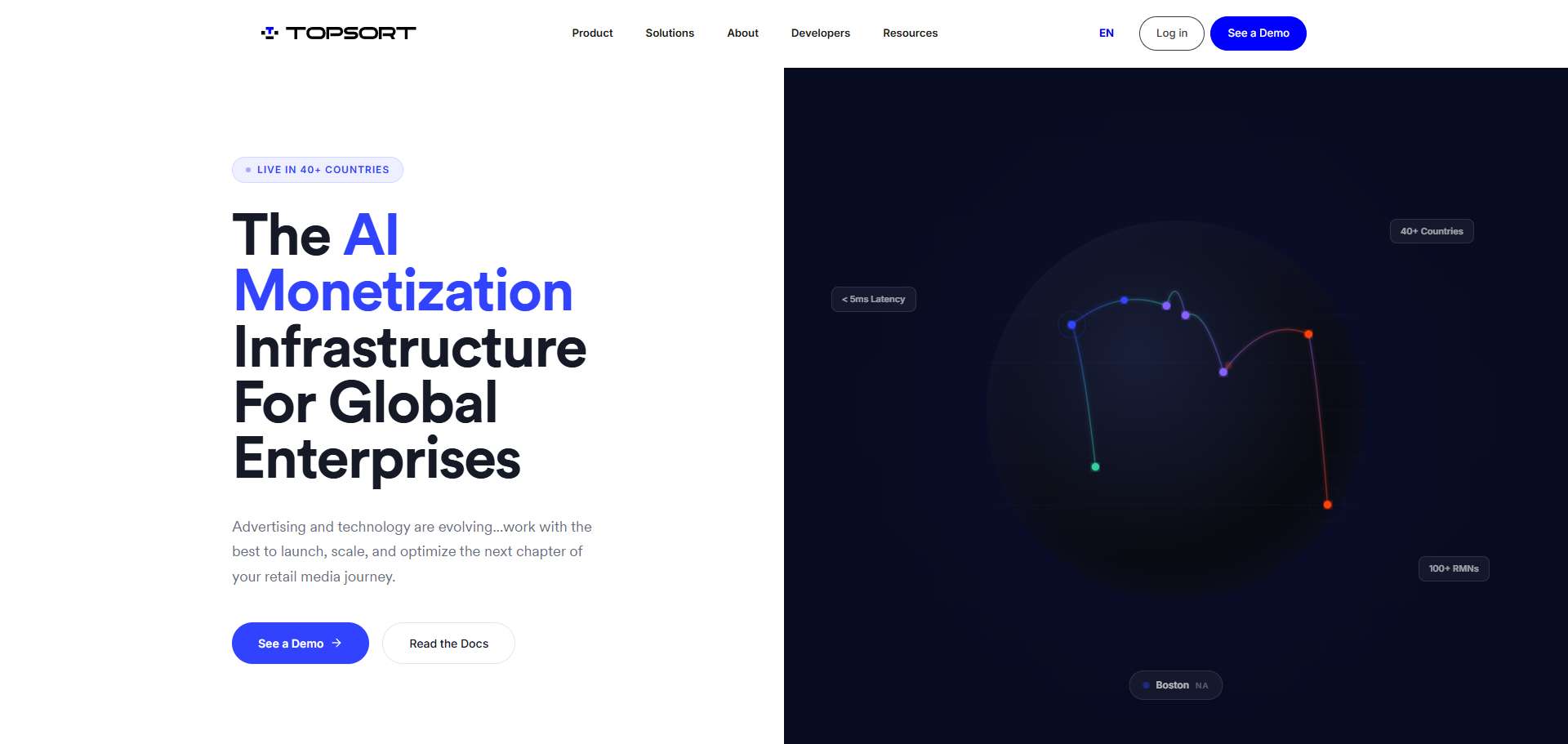
Topsort — the California AI ad server platform for retail media monetization — demonstrates one of the most sophisticated B2B product architecture websites in the Bay Area’s enterprise software market, built around a product portfolio that spans from launch-ready infrastructure to AI optimization to planetary-scale commerce intelligence. The Core Infrastructure product suite — T-Zero (launch your ad server in days), T-Platform (complete retail media in a box), T-Engine (infrastructure at planetary scale), Toptimize (AI layer for your existing stack), and T-Brain (foundational commerce intelligence) — communicates both the entry-level accessibility of the T-Zero offering and the institutional scale of the T-Engine, allowing retailers at every stage of retail media maturity to find a relevant product entry point. The Growth Channels section — covering Offsite Ads and In-Store Journey — extends the platform’s reach beyond digital shelf placement into the full omnichannel retail media ecosystem, positioning Topsort as a comprehensive revenue infrastructure partner rather than a point solution for a single ad format. The Toppie Network — comprising the Toptimize SSP, Private Toppie, and Toppie DSP — communicates the firm’s ambition to build a proprietary supply-demand ecosystem around its technology rather than simply integrating with existing ad infrastructure. The “Leading AI Ad Server Platform for Retail” headline is category-ownership language that positions Topsort at the top of an emerging enterprise software category, commanding the first-mover credibility that enterprise procurement teams consider when evaluating platform partners.
Humaans
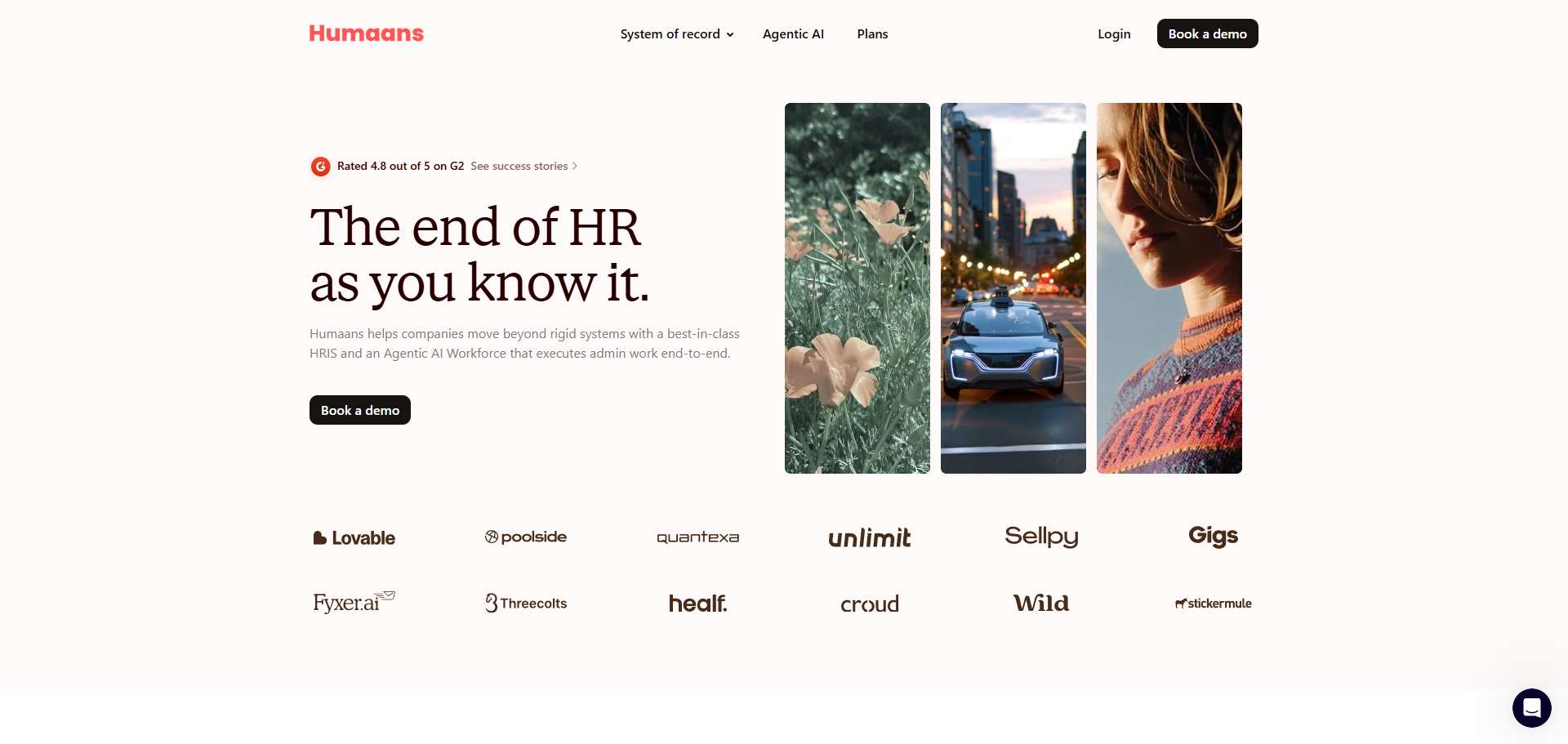
Humaans — the AI-powered HRIS platform for growing teams, backed by Y Combinator, Lachy Groom, and Shopify’s Tobias Lütke, with a San Francisco office serving its North American market — demonstrates how a modern HR software company can build a B2B website that speaks simultaneously to three distinct enterprise buyer roles who each evaluate HRIS platforms through a completely different lens. The three-track navigation — People Operations, Finance & Planning, and IT Management — organizes the product’s capabilities around the functional buyer rather than around the software features, ensuring that the HR director, the CFO, and the CISO each find content tailored to their specific evaluation criteria in a single product. The AI Companion feature — described as providing “instant answers for employees” — and the Agentic AI section communicate Humaans’ investment in the autonomous AI capabilities that define the next generation of HRIS, differentiating the platform from legacy HR software that requires manual configuration and administrative overhead at every step. The feature depth visible in the navigation — Workflow Automation, Requests & Approvals, Performance Reviews, Absence Management, Timesheets, and People Analytics — communicates a platform comprehensive enough to replace multiple point solutions, which is the central value proposition of modern HRIS for the growing teams segment Humaans targets. The Book a Demo CTA placement in the primary navigation reflects a B2B sales motion optimized for the mid-market buyer who needs a human conversation before committing to a new HR system.
Pathbooks
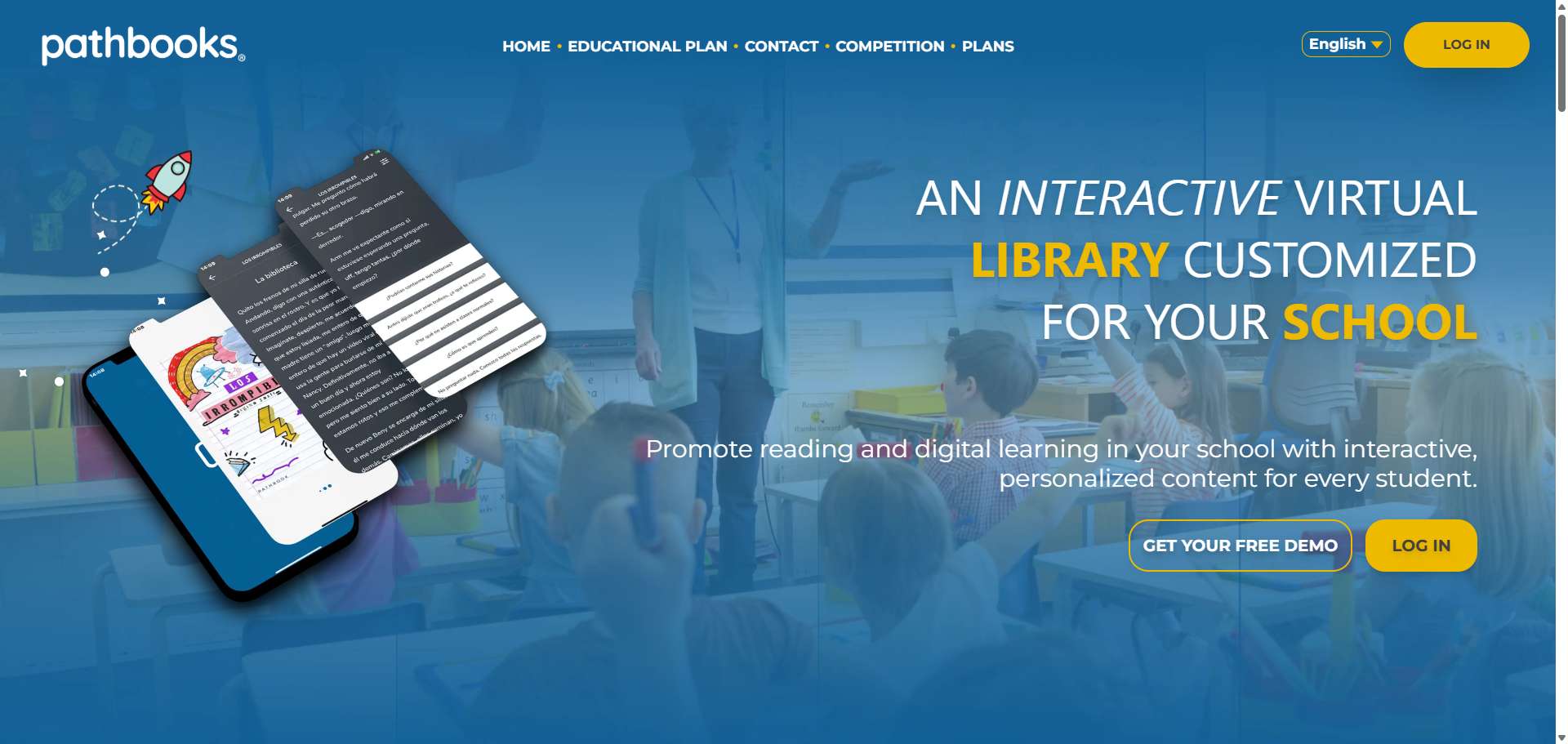
Pathbooks — the interactive virtual library platform for K-12 schools, backed by Google Launchpad Accelerator, GSV Labs, Draper Associates, and recognized on Shark Tank — has built a B2B school technology website that converts the typically complex institutional procurement decision into an intuitive, value-forward experience organized around a single compelling promise: an interactive reading plan that drives each student to read at least 20 books per year, with 45% more reading engagement than traditional formats. The homepage positioning — “An Interactive Virtual Library Customized for Your School” — speaks directly to the key decision-maker in school technology sales: the curriculum director or school administrator who has been burned by generic edtech platforms that require extensive customization and generate minimal adoption. The “customized for your school” language signals that Pathbooks delivers a school-specific implementation rather than a generic app subscription. The B2B product architecture — Educational Plan, Pricing, and Contact — reflects the institutional sales model with dedicated pathways for school administrators to request demos, access pricing, and engage a sales process appropriate for annual per-student subscription contracts. The bilingual platform capability (English and Spanish) is a significant differentiator for the diverse school populations across California and the broader U.S. market, positioning Pathbooks as the interactive reading solution for schools serving both English-dominant and Spanish-speaking student populations. The competition section — targeting student writing participation — extends the brand relationship beyond the institutional subscription into a community engagement strategy that builds teacher loyalty and student adoption simultaneously.
Rippling
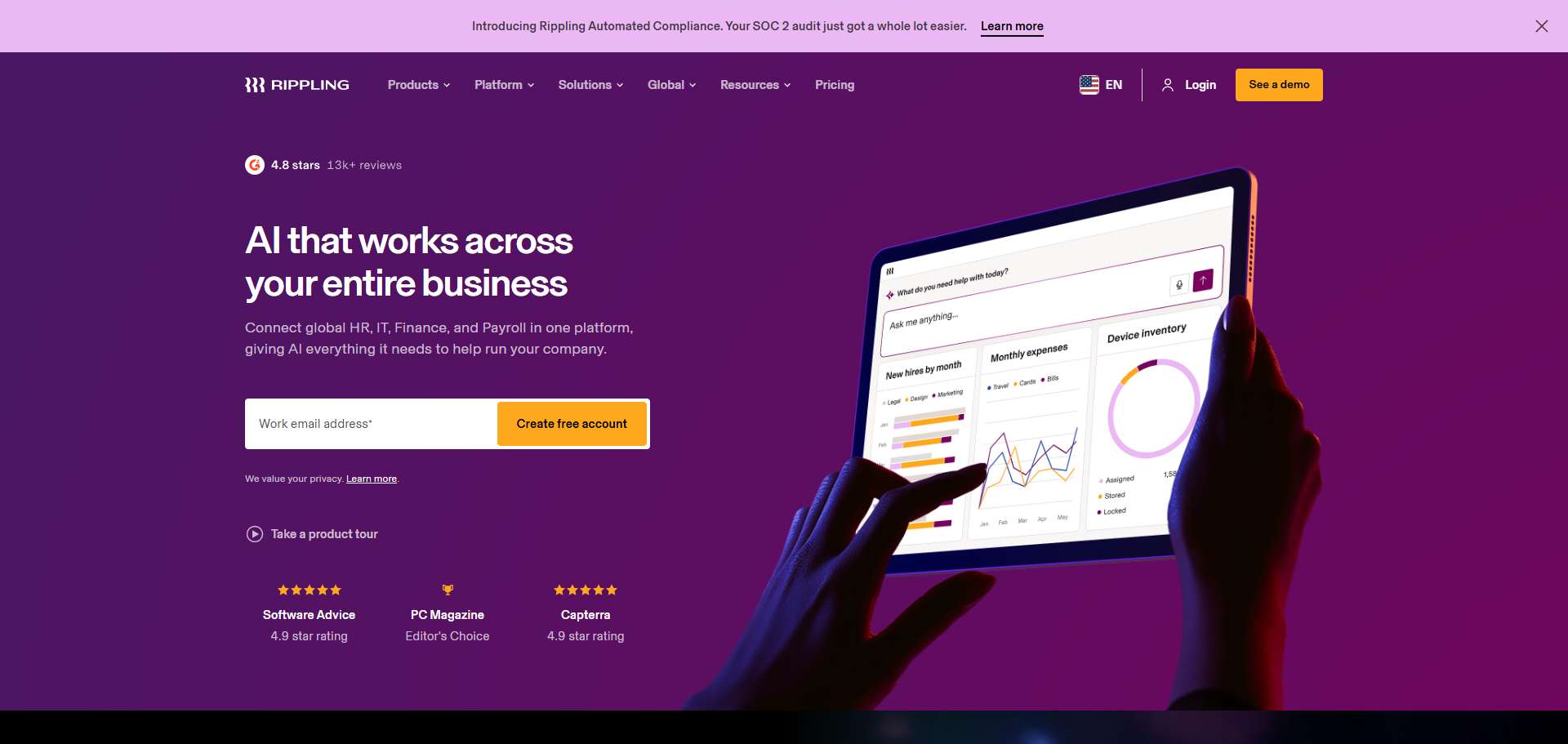
Rippling — the San Francisco workforce management platform founded in 2016 by Parker Conrad and Prasanna Sankar, valued at $16.8 billion following its May 2025 Series G round of $450 million backed by Goldman Sachs, Sands Capital, Baillie Gifford, and Y Combinator, generating $570+ million in annualized revenue with 30%+ annual growth, and serving 25,000+ customers across HR, IT, and Finance from its San Francisco headquarters — has built the most structurally ambitious B2B platform website in the Bay Area, organized around a product philosophy that no competitor can credibly replicate: the Employee Graph. The Employee Graph — Rippling’s proprietary unified employee data model that continuously updates a single source of truth across every HR, IT, and Finance application — is communicated on the site not as a feature but as a foundational architectural advantage that explains why Rippling’s automation is more powerful than any competitor’s: when one system contains every employee attribute, permission, compensation detail, device assignment, and application access in a single continuously synchronized record, the automation that runs on top of it can execute cross-functional workflows that no bolt-on integration can replicate. The compound product strategy — 24+ individual products across HR Cloud, IT Cloud, Finance Cloud, and Global Payroll — is presented through a navigation architecture that allows a buyer to evaluate individual modules (Payroll, Benefits, Device Management, Corporate Cards) or the full platform, with each module page communicating both standalone value and the compounding advantages of adding adjacent modules. The “eliminates friction from running a business” brand promise — precise, binary, and measurable — is one of the most confident value propositions in Bay Area enterprise software, and the site’s product demonstration architecture supports it at every level.
6sense
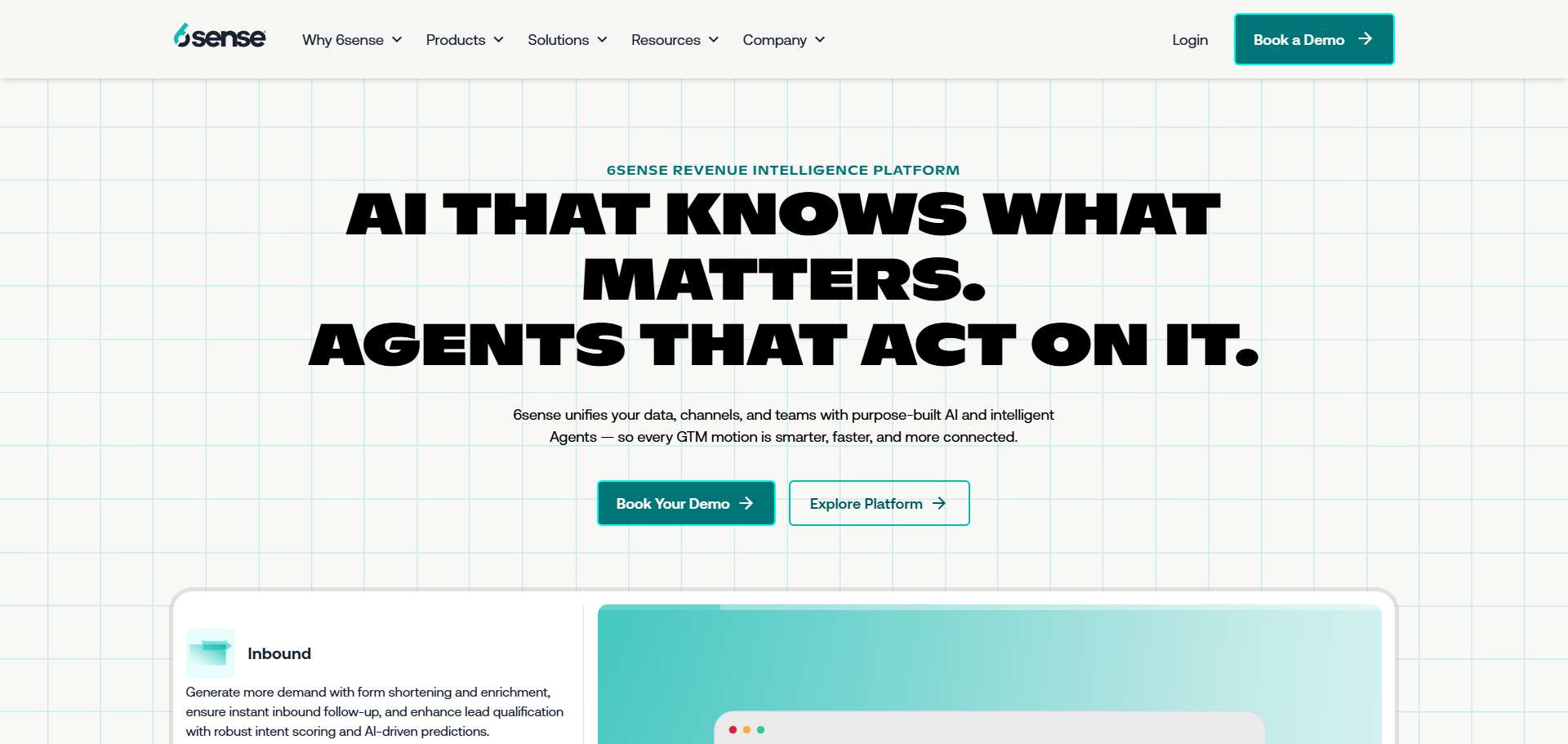
6sense — the San Francisco B2B Revenue AI platform generating $200 million in annual revenue, serving enterprise marketing and sales teams at companies including Cisco, Zendesk, and Informatica, and pioneering the Account-Based Marketing category that has redefined how enterprise go-to-market teams identify and prioritize their highest-probability buyers — has built a website whose “Revenue AI” positioning is the most confident category evolution claim in the Bay Area B2B marketing technology market. The shift from “Account-Based Marketing platform” to “Revenue AI” — communicated as the site’s primary product identity rather than a feature description — reflects the firm’s strategic move from a marketing automation tool into a full-funnel revenue intelligence platform that spans marketing, sales development, and direct sales workflows simultaneously. The dark buyer identification claim — “6sense reveals the companies researching your solution right now, even before they fill out a form” — directly addresses the most acute frustration of B2B sales teams: the 95% of in-market buyers who are actively researching solutions but have not yet raised their hand with a contact form, demo request, or sales conversation. The AI-powered predictive models, intent data network, and buying stage identification capabilities are communicated through interactive product screenshots and workflow visualizations that give technical evaluators the platform detail they need while keeping the CMO-level narrative accessible. The integration ecosystem — covering Salesforce, HubSpot, Outreach, Salesloft, and 50+ additional platforms — communicates that 6sense amplifies existing GTM infrastructure rather than requiring a wholesale technology replacement.
PagerDuty
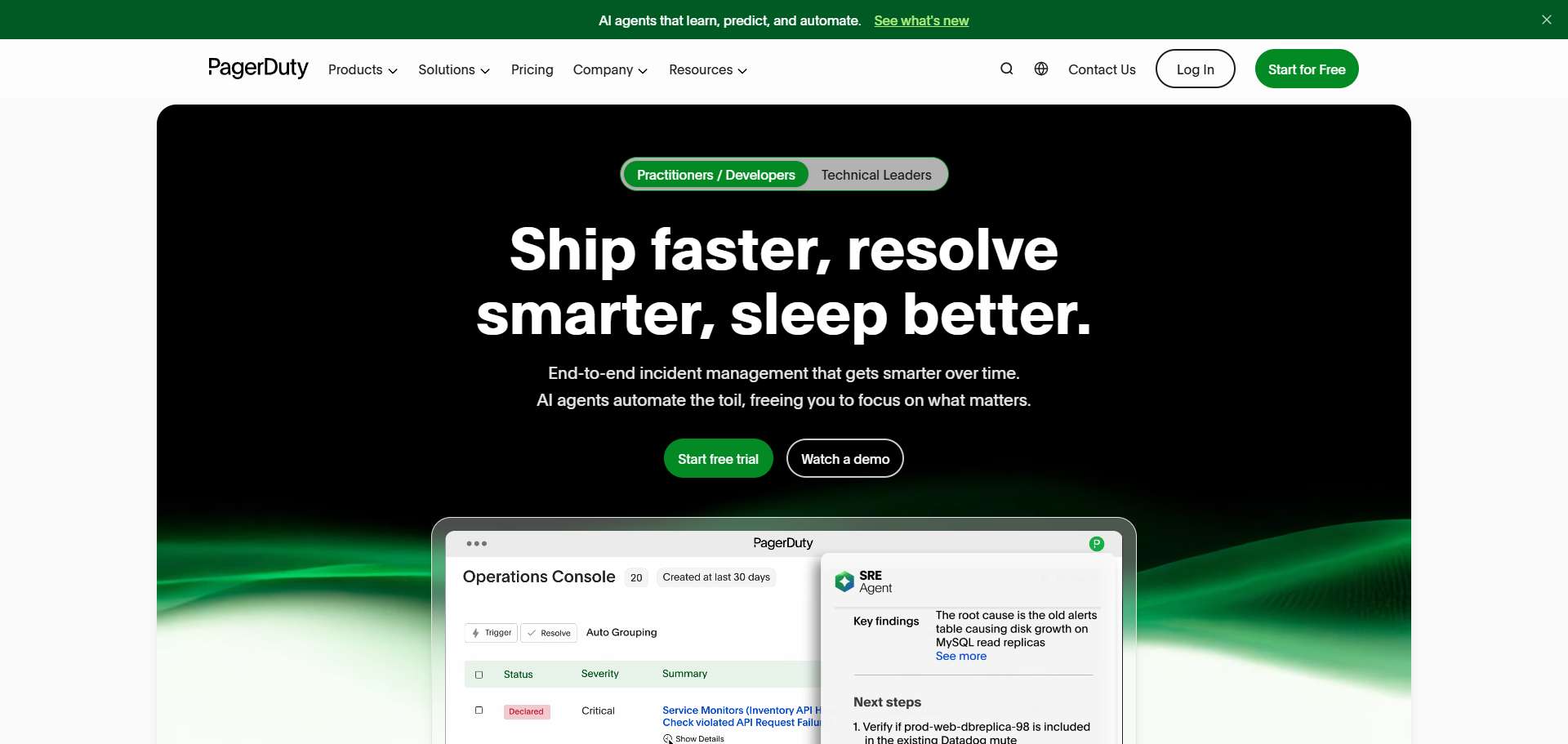
PagerDuty — the San Francisco operations performance platform founded in 2009 and publicly traded on the NYSE, serving over 14,000 enterprise customers including Comcast, Slack, Lululemon, and eHarmony, powering incident response and digital operations management for companies whose revenue depends on continuous digital uptime — has built a website whose “Operations Cloud” platform identity is the most fully realized B2B enterprise brand transformation story in the Bay Area technology market. The evolution from “PagerDuty: on-call and incident response alerting tool” to “PagerDuty: Operations Cloud platform” is communicated across the site as a strategic repositioning that broadens the firm’s enterprise footprint from a single workflow category into the comprehensive operational intelligence layer that enterprise engineering, DevOps, IT, and business operations teams share. The AIOps capabilities — automated noise reduction, predictive alerting, machine learning-based incident correlation, and autonomous runbook execution — are communicated with the specific precision that engineering and SRE buyers need to evaluate whether the AI layer reduces alert fatigue or simply generates a different kind of noise. The Customer Service Operations track — extending PagerDuty beyond pure engineering workflows into customer-facing service management — creates a new buyer center in the enterprise account beyond the CTO, adding the Chief Customer Officer and VP of Customer Experience to the platform’s stakeholder map. The “always-on digital world” brand narrative, tied to specific customer outcome metrics (mean time to resolve, business impact reduction, engineering efficiency gains), positions PagerDuty not as an IT tool but as a revenue protection platform for enterprises whose business model depends on digital reliability.
Zendesk
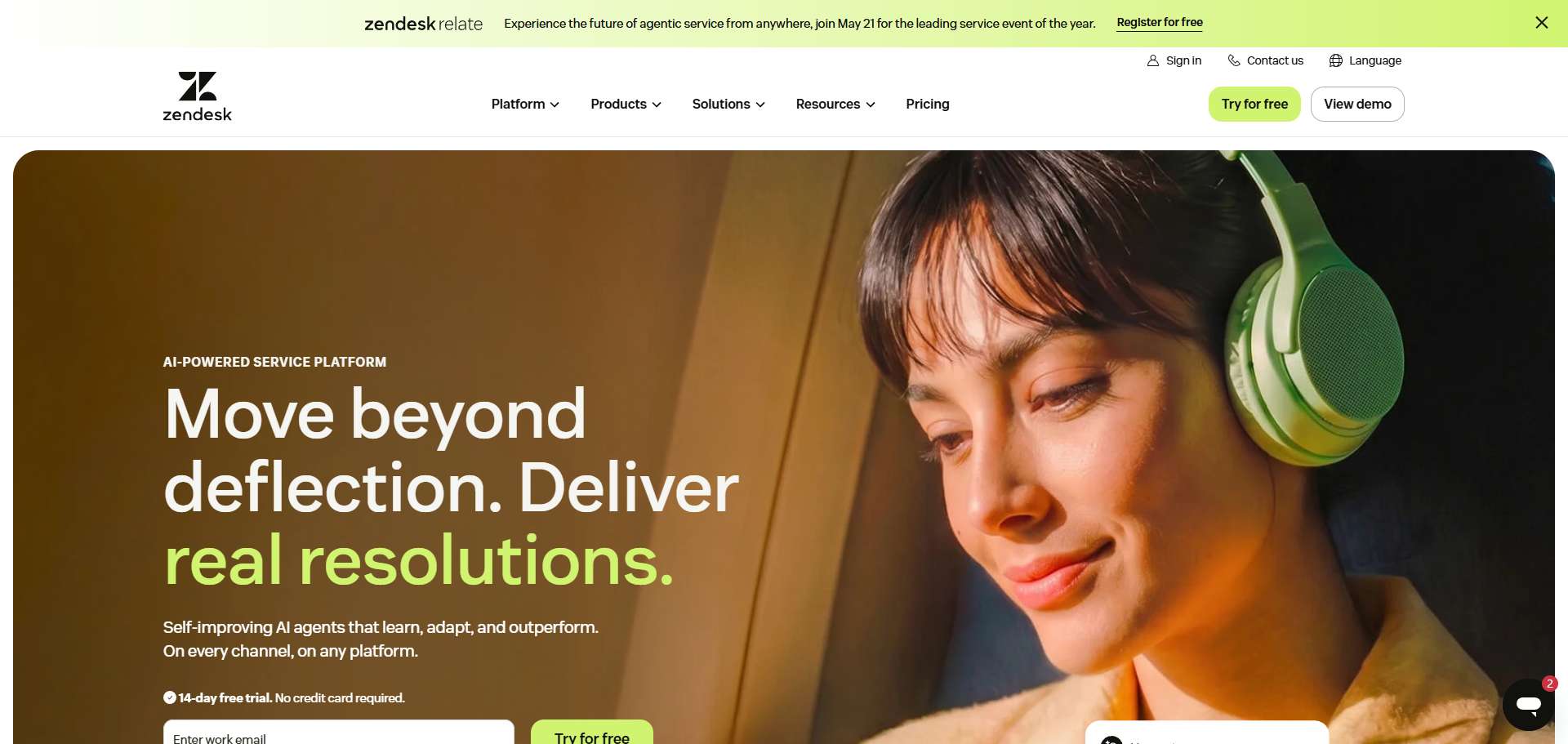
Zendesk — the San Francisco customer service and CRM platform founded in Copenhagen in 2007 and headquartered at 989 Market Street in San Francisco, named a Leader in the 2025 Gartner Magic Quadrant for the CRM Customer Engagement Center, powering nearly 5 billion issues resolved annually across 20,000 AI-powered customers, with a projected AI Annual Recurring Revenue of $200 million in 2025, and having acquired Unleash in December 2025 to extend its AI knowledge platform into enterprise employee service — has built a website whose “Resolution Platform” brand identity is the most consequential strategic repositioning in the Bay Area enterprise software market since Salesforce redefined CRM as cloud software. The shift from “Zendesk: customer service ticketing system” to “Zendesk: AI-powered Resolution Platform” — executed across every page of the site with disciplined consistency — reflects the firm’s conviction that the CX industry is being restructured around resolution outcomes rather than ticket management processes, and that the platform capable of autonomously resolving customer issues rather than routing them is the one that will win enterprise procurement decisions in 2025 and beyond. The AI Agents capability — positioned as the site’s primary product headline, able to autonomously resolve up to 80% of interactions while self-learning and self-improving with every resolution — is communicated not as a feature but as a structural transformation of the customer service operating model: from a human team assisted by software to an AI system augmented by human expertise. The three-cloud architecture — Customer Service, Employee Service, and Contact Center — extends Zendesk’s addressable market beyond external CX into internal IT service desks and enterprise contact centers, tripling the platform’s buyer surface within existing enterprise accounts. The 1,800+ app marketplace, AWS strategic collaboration announced December 2025, and expanded Microsoft integration communicate the ecosystem depth that enterprise procurement teams require when evaluating whether a platform can replace fragmented legacy infrastructure rather than adding to it.
Amplitude
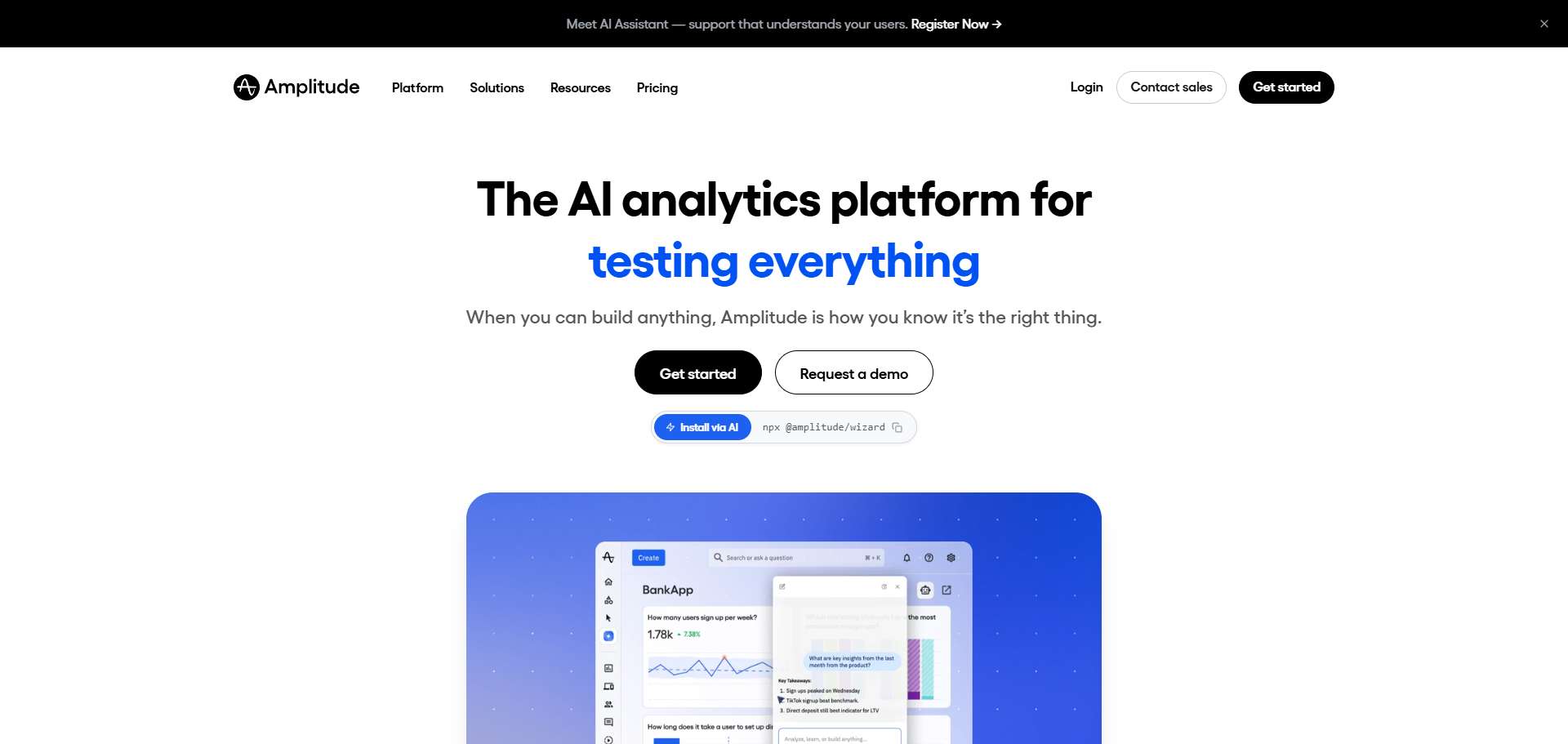
Amplitude — the San Francisco digital analytics and product intelligence platform founded in 2012 and publicly traded on NASDAQ, pioneering the digital analytics category that has become the standard operating platform for product teams at AI companies (Cruise, Midjourney), consumer apps (DoorDash, Coinbase), and B2B software leaders (Atlassian, Rippling, Canva), with 3,500+ paying customers and a platform that analyzes hundreds of billions of user actions monthly — has built the most product-led growth website in the Bay Area B2B analytics market, deploying its own product intelligence to demonstrate the category it created. The “Build better products with data” homepage positioning is deceptively simple: in a market where analytics tools lead with dashboard screenshots and feature lists, Amplitude leads with the business outcome — better products — before describing the mechanism. This inversion mirrors the product philosophy that Amplitude’s platform teaches its customers: start with the outcome, then work backward to the data that reveals how to achieve it. The self-serve Scholarship plan — free for startups and small teams up to 10 million events monthly — creates the product-qualified lead flywheel that drives Amplitude’s enterprise pipeline: companies that grow into paying tiers have already experienced the platform’s value, learned its workflows, and built internal champions who will advocate for renewal and expansion. The “Powered by AI” platform narrative, featuring predictive cohorts, automated insight generation, and natural language querying, positions Amplitude at the intersection of analytics and the AI layer that every product team is actively building, communicating platform relevance for 2025 and beyond rather than legacy dashboard tooling.
From a document automation platform that converts visitors with a no-signup product demo, to a $2.5 billion public safety data intelligence company backed by Sequoia, to an AI-powered HRIS that speaks simultaneously to HR, finance, and IT buyers — every B2B website above succeeds because it communicates its value proposition with surgical precision to the specific buyer who will champion the purchase inside their organization. If your B2B technology company, SaaS platform, or enterprise software business is based in the Bay Area, KO Websites builds B2B websites with the product architecture, social proof strategy, and conversion design that drives enterprise pipeline and shortens complex sales cycles. Contact us today for a free consultation.
The KO Websites Advantage for B2B Excellence
Enterprise-Level Technical Infrastructure
We architect robust platforms capable of handling complex B2B requirements including secure client portals, multi-tier pricing displays, and integration with CRM systems. Our web design services ensure your website performs flawlessly under high-volume traffic while maintaining lightning-fast load speeds that keep impatient executives engaged.
Lead Generation Optimization
Every design element serves a conversion purpose, from strategically positioned contact forms to compelling call-to-action buttons that guide visitors through your sales funnel. Our Bay Area SEO expertise ensures your website attracts high-value prospects actively searching for your services.
Industry Compliance and Security Standards
B2B transactions require bulletproof security and adherence to industry regulations. We implement SSL certificates, secure payment processing, and data protection protocols that meet enterprise standards while ensuring your website inspires confidence among corporate clients.
Proven Track Record with B2B Leaders
Our portfolio showcases successful partnerships with Bay Area B2B companies that have experienced measurable growth through our digital solutions. Review our client testimonials to see how we’ve transformed B2B businesses across various sectors.
Advanced Features for B2B Success
Custom Client Portals
Secure, password-protected areas where your clients can access project updates, download resources, submit requests, and communicate directly with your team through integrated messaging systems.
Automated Lead Scoring
Intelligent systems that track visitor behavior, assign prospect values, and automatically notify your sales team when high-potential leads engage with your content or pricing information.
Interactive Service Calculators
Dynamic tools that allow prospects to estimate project costs, timeline requirements, and service options while capturing their contact information for immediate follow-up by your sales team.
Mobile-First Responsive Architecture
Complete functionality across all devices ensures busy executives can access your services, submit inquiries, and review proposals whether they’re in boardrooms or traveling between San Francisco meetings.
Complete B2B Digital Solutions
- Enterprise Services Showcase: Comprehensive presentation of your enterprise-level capabilities with detailed service descriptions, case studies, and implementation timelines that demonstrate your ability to handle large-scale B2B projects.
- B2B Sales Funnel Integration: Sophisticated lead nurturing sequences that guide prospects from initial awareness through proposal requests, incorporating automated email sequences and personalized content delivery based on visitor behavior.
- Wholesale Distribution Platforms: Advanced e-commerce functionality supporting bulk ordering, tiered pricing structures, and account-specific catalogs that streamline the purchasing process for your B2B clients.
- Corporate Account Management: Dedicated dashboard systems allowing corporate clients to manage multiple projects, track order histories, access exclusive pricing, and communicate with assigned account representatives.
- Technical Support Integration: Built-in helpdesk functionality, knowledge base systems, and ticket management that ensures your clients receive immediate assistance while reducing support overhead costs.
- Training and Implementation Resources: Interactive training modules, video libraries, and step-by-step implementation guides that help your clients maximize value from your services while positioning your company as a trusted advisor.
- Contract Negotiation Tools: Secure document sharing, electronic signature capabilities, and proposal management systems that accelerate the contract approval process and reduce sales cycle length.
- Performance Analytics Dashboard: Real-time reporting tools that allow both you and your clients to monitor project progress, ROI metrics, and performance indicators through intuitive visual interfaces.
Explore our portfolio to see these features in action across various B2B industries.
Serving B2B Companies Throughout the Bay Area
From innovative startups in Silicon Valley to established enterprises in downtown San Jose, we partner with B2B organizations across the entire Bay Area ecosystem. Our deep understanding of local business dynamics, from the tech corridors of Pleasanton to the corporate centers of Oakland, enables us to create websites that resonate with your target markets. Whether you serve clients in the financial districts of San Francisco or the industrial zones of San Leandro, our localized approach ensures your website connects with Bay Area decision-makers.
Integrated Marketing Solutions for B2B Growth
Beyond exceptional web design, we provide comprehensive digital marketing strategies specifically tailored for B2B success. Our PPC management services target high-intent keywords that B2B buyers use when researching vendors, ensuring your company appears prominently when prospects are ready to make purchasing decisions. Through strategic social media marketing on LinkedIn and industry-specific platforms, we help establish your thought leadership while generating qualified leads. Additionally, our video production services create compelling case studies, product demonstrations, and executive interviews that build trust with potential clients. Complete the package with our managed hosting and maintenance services to ensure your B2B platform operates at peak performance 24/7.
What B2B Clients Ask Us
How do you ensure our website generates qualified B2B leads rather than unqualified inquiries?
We implement sophisticated lead qualification mechanisms including progressive profiling forms, industry-specific landing pages, and content gating strategies that attract serious prospects while filtering out casual browsers. Our approach includes detailed buyer persona research and targeted content creation that speaks directly to decision-makers in your industry.
What security measures do you implement for B2B websites handling sensitive corporate information?
Our security protocols include SSL encryption, regular security audits, secure hosting environments, and compliance with industry standards recognized by organizations like Google’s developer guidelines. We also implement role-based access controls and secure client portals that protect confidential business information.
Can you integrate our existing CRM and business management systems with the new website?
Absolutely. We specialize in seamless integration with popular B2B platforms including Salesforce, HubSpot, Microsoft Dynamics, and custom enterprise systems. This ensures automatic lead capture, synchronized contact management, and streamlined workflow processes that eliminate manual data entry.
How do you optimize websites for the complex B2B buying process involving multiple decision-makers?
We create multi-layered content strategies that address different stakeholders throughout the buying journey, from technical specifications for end-users to ROI calculators for financial decision-makers. Our sites include shareable resources, executive summaries, and collaborative features that facilitate group decision-making processes.
What ongoing support do you provide after the B2B website launches?
Our website management services include regular security updates, performance monitoring, lead generation optimization, and content updates. We also provide training for your team and monthly analytics reports showing lead generation performance and conversion metrics.
How do you measure the success of a B2B website beyond basic traffic metrics?
We track B2B-specific KPIs including lead quality scores, sales cycle acceleration, proposal request rates, and customer acquisition costs. Our clients consistently report improved lead generation and faster sales cycles, as documented in our success stories and testimonials.
Elevate Your B2B Digital Presence
Transform your B2B company’s online presence into a powerful lead generation machine that works continuously to attract and convert high-value prospects. Our B2B website design solutions have helped Bay Area companies increase qualified leads by up to 300% while significantly reducing sales cycle times. Don’t let your competitors capture the decision-makers who should be choosing your services.