Professional SaaS Website Design That Drives Subscriptions and Growth
Custom websites for Bay Area SaaS companies that showcase innovation, build user trust, and convert visitors into loyal subscribers with data-driven design strategies
Best SaaS Company Websites: Bay Area Examples That Convert Visitors Into Trial Users
SaaS company websites operate under a unique conversion constraint: they must explain a complex software product to a visitor who may not yet understand the problem it solves, communicate enough value to justify a trial or demo request, and do all of this in the few seconds before attention shifts elsewhere. The best SaaS websites in the Bay Area solve this challenge through a combination of precision headline writing, tight use-case architecture, and social proof strategies that turn skeptical visitors into activated users. The California companies below demonstrate how it’s done across a diverse range of SaaS categories.
Humanic
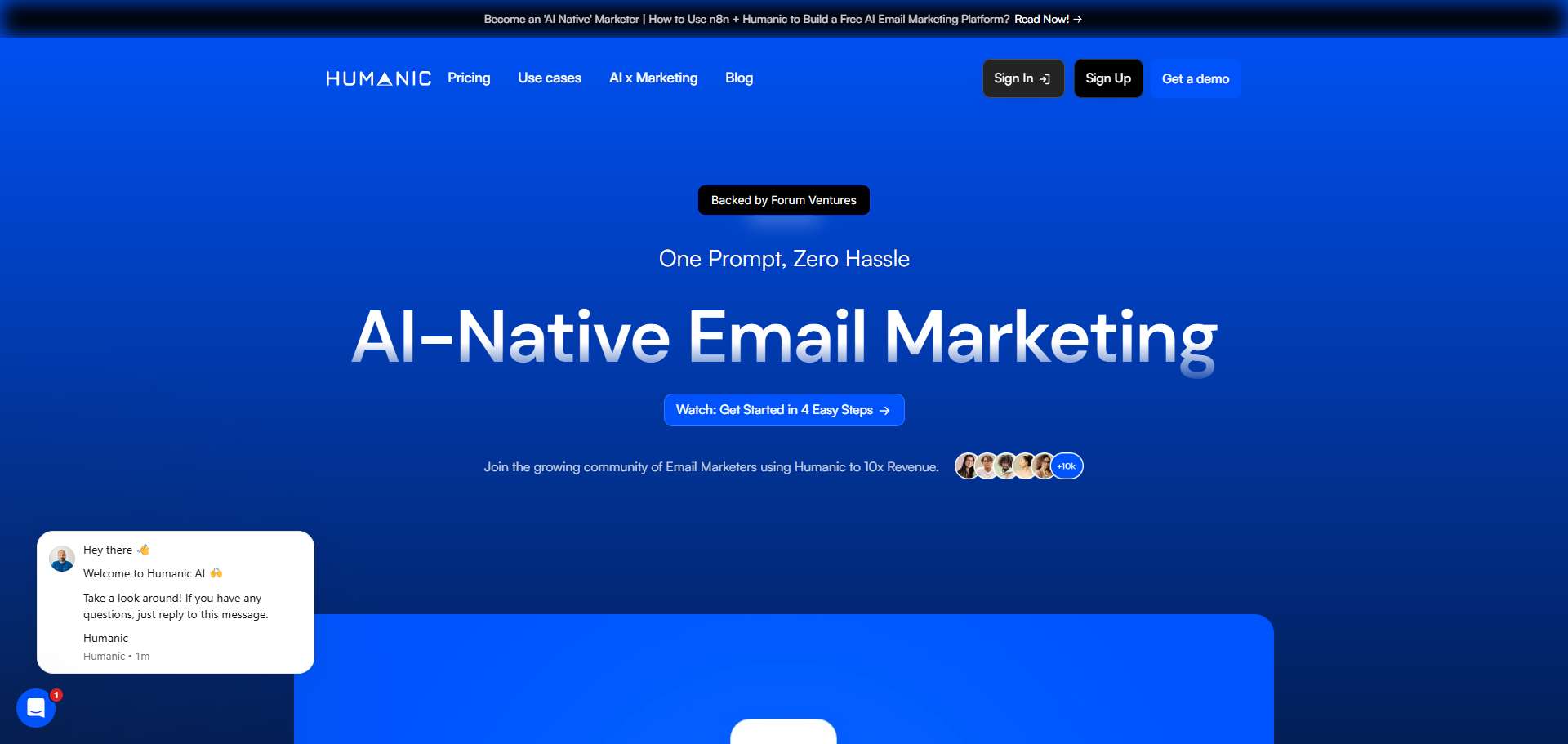
Humanic — the San Francisco Bay Area AI-native email marketing platform backed by Forum Ventures — demonstrates a SaaS website strategy built entirely around category creation rather than feature comparison. The positioning as an “AI-Native Agentic Email Marketing” platform is not a subtle differentiation claim — it is a direct bid to own a new category before competitors can occupy it. In a crowded email marketing software market dominated by Mailchimp, HubSpot, and Klaviyo, Humanic’s choice to lead with “agentic” rather than “automated” signals to product-led growth teams that this is a fundamentally different paradigm, not an incremental improvement. The blog content strategy reinforces the category creation approach: the featured article on building an AI email marketing platform with n8n + Humanic is simultaneously a technical tutorial and a thought leadership piece that positions Humanic at the intersection of the AI-native marketer movement and the no-code workflow automation trend. The dual CTA structure — Get a Demo paired with Sign Up — serves different buyer stages simultaneously: the Sign Up CTA captures self-serve users ready to trial immediately, while the Get a Demo CTA captures enterprise prospects who need a guided evaluation. The Forum Ventures backing badge adds investor credibility that resonates with the Bay Area’s SaaS-savvy buyer community. For AI-powered SaaS companies looking to break through category noise with a bold positioning play, Humanic’s website is a compelling Bay Area case study.
SetPro
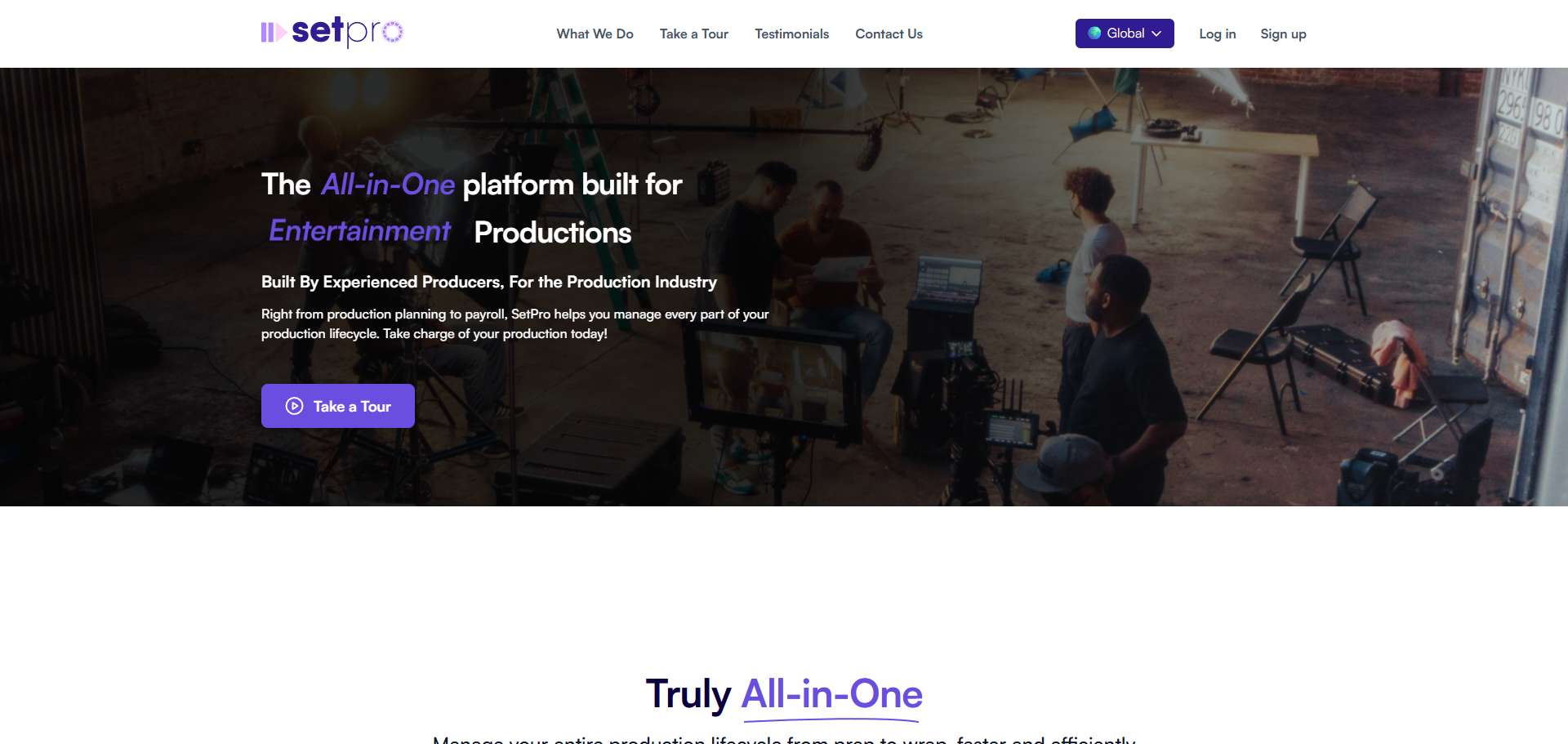
SetPro — the San Mateo AI-powered production management platform for the entertainment industry — demonstrates one of the clearest vertical SaaS website strategies in the Bay Area: go narrow, go deep, and make every word on the homepage speak directly to the specific pain of a single industry. The rotating hero headline — “The All-in-One platform built for Entertainment / Movies / Commercials / TV Series / Documentaries / Web Series Productions” — communicates vertical specificity in a way that a generic project management platform never could, immediately telling production professionals that this software was built by people who understand their world. The sub-headline, “Built By Experienced Producers, For the Production Industry,” closes the trust gap that every vertical SaaS must bridge: the prospective customer’s unspoken question of whether the people who built this tool have ever actually done the work. The global market flag selector — Global, India, USA — signals international reach while allowing region-specific users to self-select into the appropriate product experience and pricing. The “Take a Tour” CTA, placed before “Sign Up,” reflects a product experience philosophy that prioritizes user education over premature conversion — giving production professionals the full platform walkthrough before asking them to commit. Trusted by over 350 productions, SetPro’s website architecture proves that a tightly focused vertical SaaS with a $18.2M revenue run rate can outperform generalist competitors by simply speaking the exact language of its target customer.
ConvergeHub
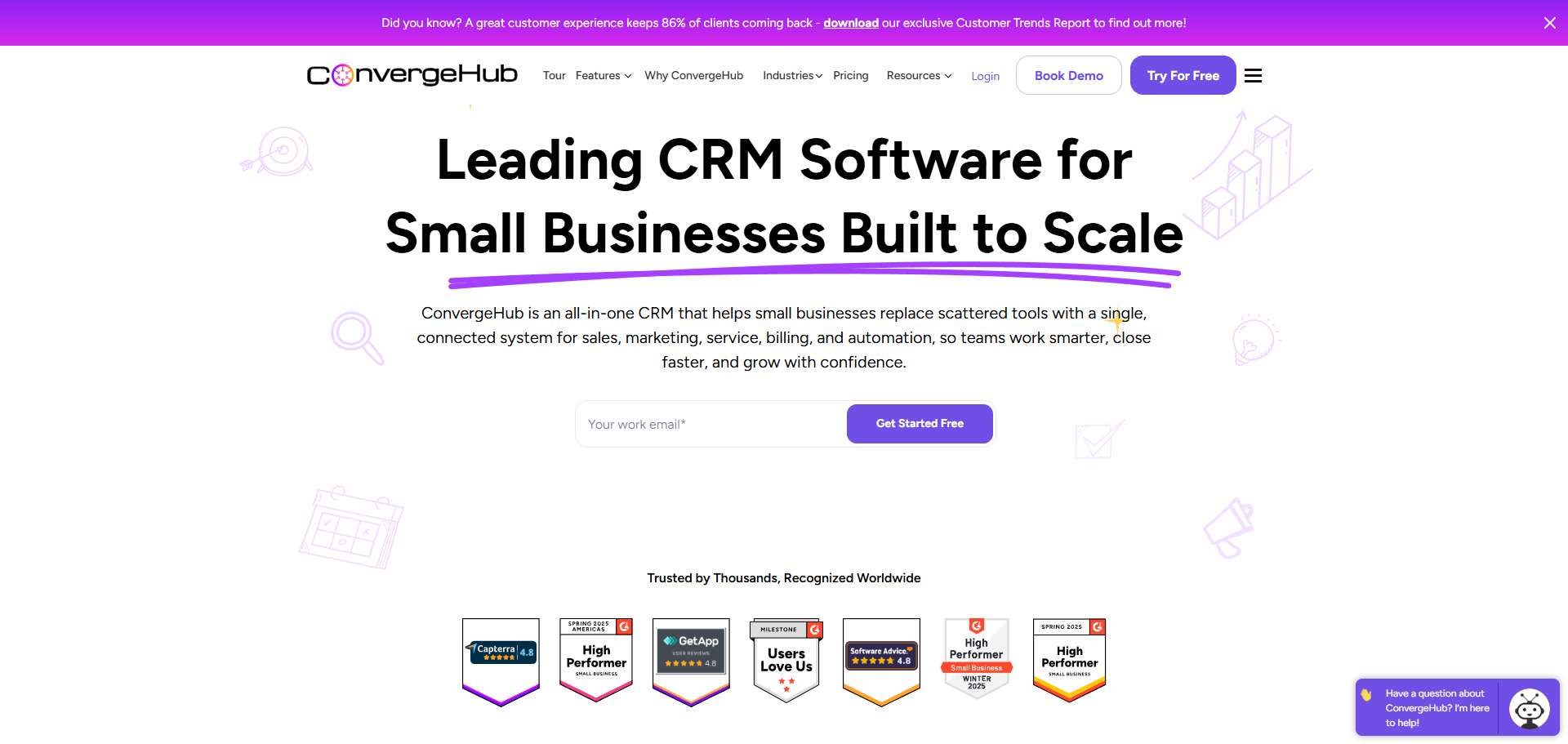
ConvergeHub — the Dublin, California all-in-one CRM built for small and medium businesses — has built a SaaS website around a positioning strategy that directly addresses the core frustration of its target market: the proliferation of disconnected point solutions that SMB owners are forced to stitch together as their businesses grow. The feature navigation — Sales, Marketing, Service, and Billing — communicates the platform’s breadth in a single glance, while the “all-in-one” headline promise answers the SMB owner’s most persistent operational headache without requiring them to read through a feature list. The Tour page provides a self-guided product walkthrough that respects the time constraints of SMB decision-makers who cannot afford an extended enterprise sales process. The platform’s $18.2M annual revenue and recognition as the Best CRM software of 2021 by ZDNet give the site the third-party validation that SMB buyers need when evaluating software they will depend on for daily operations. The integrations architecture — including QuickBooks, GoToMeeting, and Google Apps — speaks directly to the existing tool stacks of the East Bay and Bay Area small business community that makes up ConvergeHub’s primary market. For SaaS companies targeting the SMB segment with a consolidated platform play, ConvergeHub’s Dublin-based operation shows how to build a website that competes credibly against enterprise CRM giants by staying relentlessly focused on the specific needs of the underserved SMB buyer.
Waterplan
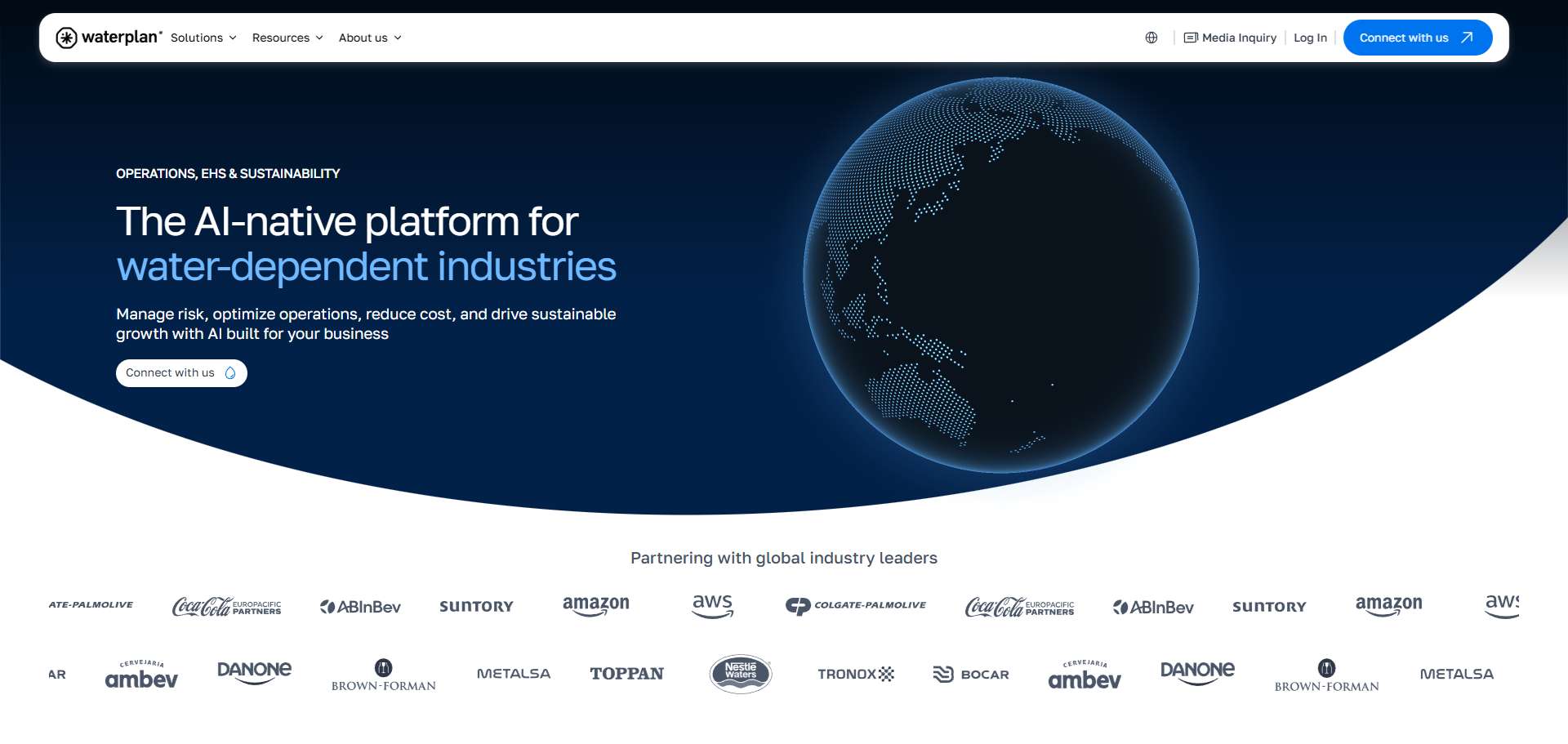
Waterplan — the San Francisco AI-native sustainability SaaS platform backed by Y Combinator and investors including Leonardo DiCaprio and Richard Branson — operates one of the most mission-aligned and visually striking SaaS websites in the Bay Area’s climate tech sector. The hero positioning — “The AI-native platform for water-dependent industries” — is precise in a way that most climate SaaS products are not: it names a specific resource (water), a specific technology paradigm (AI-native), and a specific customer type (water-dependent industries) in a single headline, leaving no ambiguity about who the product is for or what it does. The enterprise partner logo row — featuring Danone, ABInBev, AWS, Colgate, and Kurita — delivers the Fortune 500 social proof that enterprise sustainability buyers need before they initiate a procurement process, answering the implicit question “does anyone like us already use this?” with a definitive visual answer. The solution architecture — Water Risk, Water Stewardship, AI Metering, and Carbon — maps directly to the four primary workstreams of an enterprise EHS and sustainability team, allowing procurement evaluators to quickly assess whether the platform covers their specific compliance and reporting requirements. Waterplan’s $16.9M annual revenue and strategic partnership with Kurita Water Industries — one of the world’s largest water treatment firms — are embedded in the site’s press and partner content as ambient credibility signals rather than hard sales claims. For Bay Area climate tech and enterprise SaaS companies looking to build a site that converts sustainability professionals and corporate procurement teams simultaneously, Waterplan’s clean, precision-positioned website is the benchmark.
AuxoAI
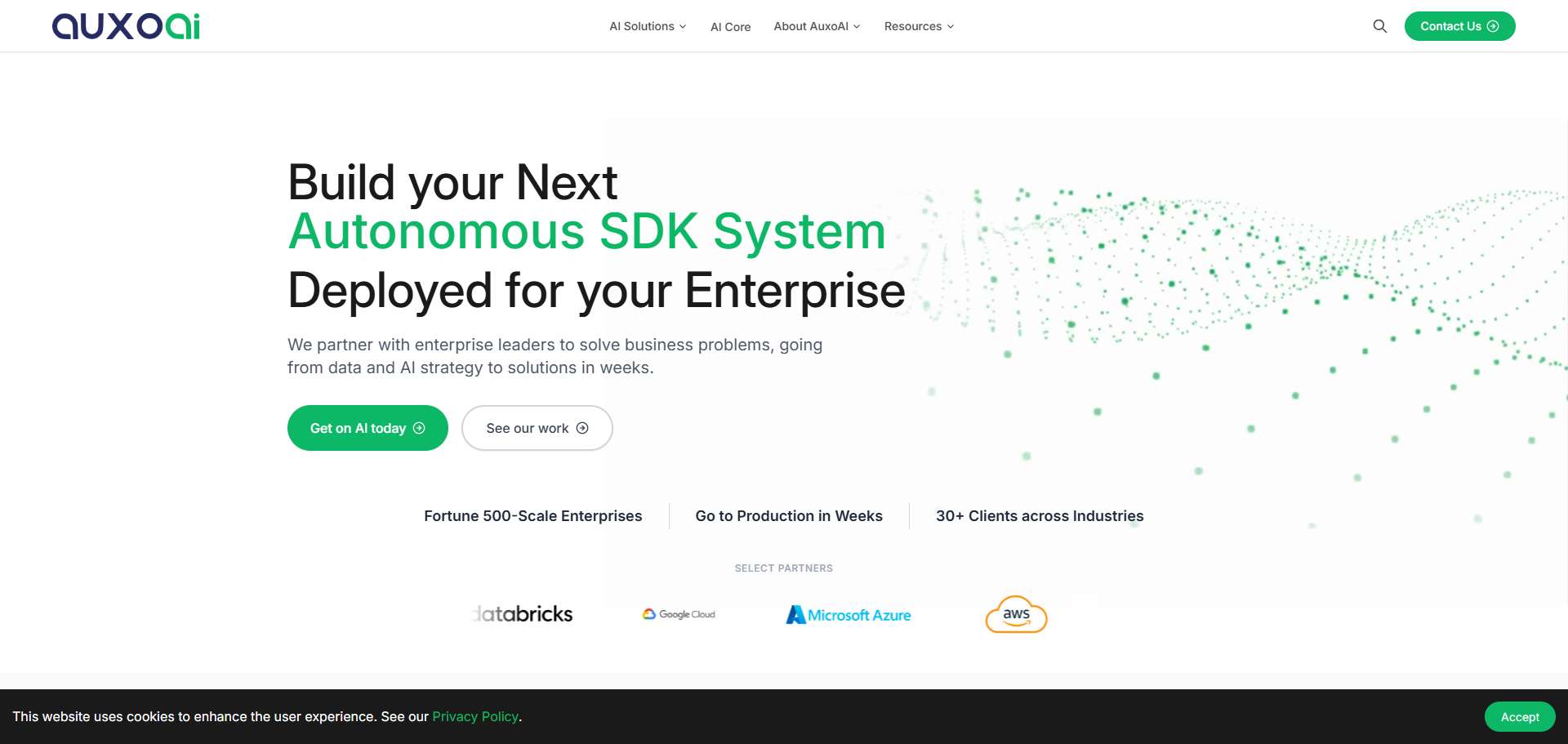
AuxoAI — the Milpitas, California AI solutions platform operating at the intersection of enterprise software and AI implementation — demonstrates how a multi-product SaaS company can build a website that serves both solution-seekers and platform-evaluators without creating navigation confusion. The solution architecture is organized along two clear axes: by use case (DataNext for Data Modernization, AINext for Custom Builds, MarketNext for GTM Acceleration) and by product (Echo for Market Simulation & Intelligence, Kimavi for Sales Acceleration, and the Damia AI Core platform). This dual-axis navigation serves two distinct buyer types simultaneously: the line-of-business buyer who searches by use case, and the IT or architecture buyer who evaluates platforms and core infrastructure. The resource library — Blogs, Whitepapers, Case Studies, and Podcasts — provides the content depth that enterprise AI buyers require during extended evaluation cycles, establishing thought leadership across the data modernization, AI implementation, and go-to-market acceleration categories the company serves. The India presence — with offices in Mumbai, Bangalore, Hyderabad, and Gurgaon alongside the Bay Area headquarters — signals the global delivery capacity that enterprise clients expect from an AI implementation partner, communicating scale without sacrificing the Silicon Valley credibility that the Milpitas address provides. The tagline “AI Made Real” is a pointed counter-positioning to the vague AI promises that flood the enterprise software market, grounding AuxoAI’s value proposition in practical implementation rather than theoretical potential.
Scribe
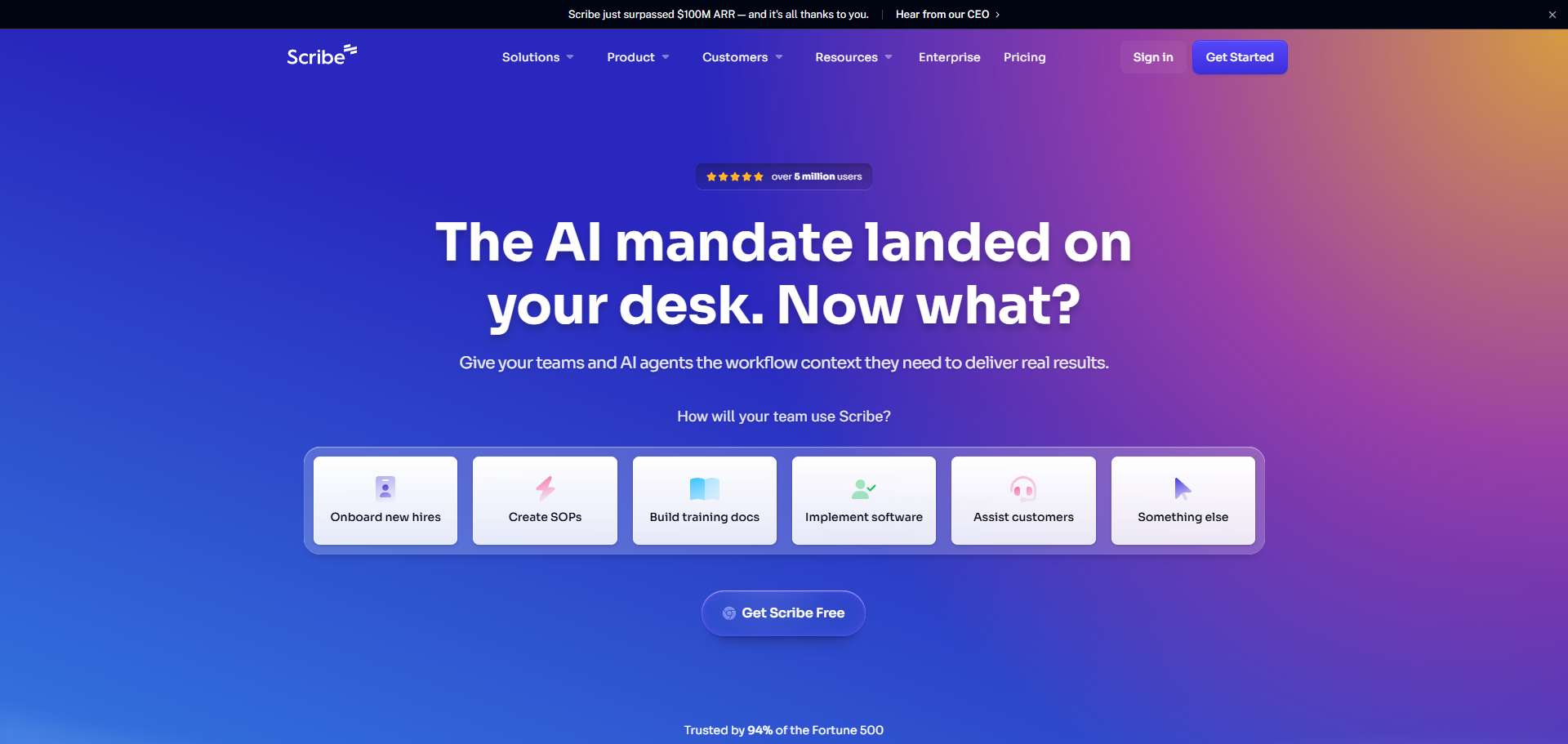
Scribe — the San Francisco Workflow AI platform founded in 2019 by Jennifer Smith and Aaron Podolny, having raised $75 million in Series C at a $1.3 billion unicorn valuation in November 2025, trusted by 94% of the Fortune 500, with 5 million users across 78,000 paying organizations including T-Mobile, LinkedIn, HubSpot, and New York Life, and having documented over 10 million workflows across 40,000 software applications — has built a SaaS website whose conversion architecture is built around a single, startlingly specific efficiency claim: “Save 20+ hours a month in explaining, training & answering ‘quick’ questions.” This framing names the exact problem — the recurring cost of institutional knowledge transfer that falls on the most knowledgeable people in every organization — in language that every team lead and operations manager recognizes as their own experience. The Scribe Capture product, communicated through a browser extension and desktop app workflow that automatically generates step-by-step guides complete with annotated screenshots as a user performs a task, is presented through a self-serve demo mechanism that allows prospects to experience the value before signing up. The Scribe Optimize product — announced with the Series C and mapping enterprise workflows to identify AI and automation ROI opportunities — is positioned in the site’s product navigation as the platform’s strategic evolution from documentation into intelligence, communicating that Scribe is not a point solution but a foundational layer for enterprise AI strategy. The “Used by 94% of the Fortune 500” social proof claim, verified by the company’s own adoption data, is the most powerful enterprise SaaS trust signal available and is deployed consistently across every page of the conversion funnel.
Gamma
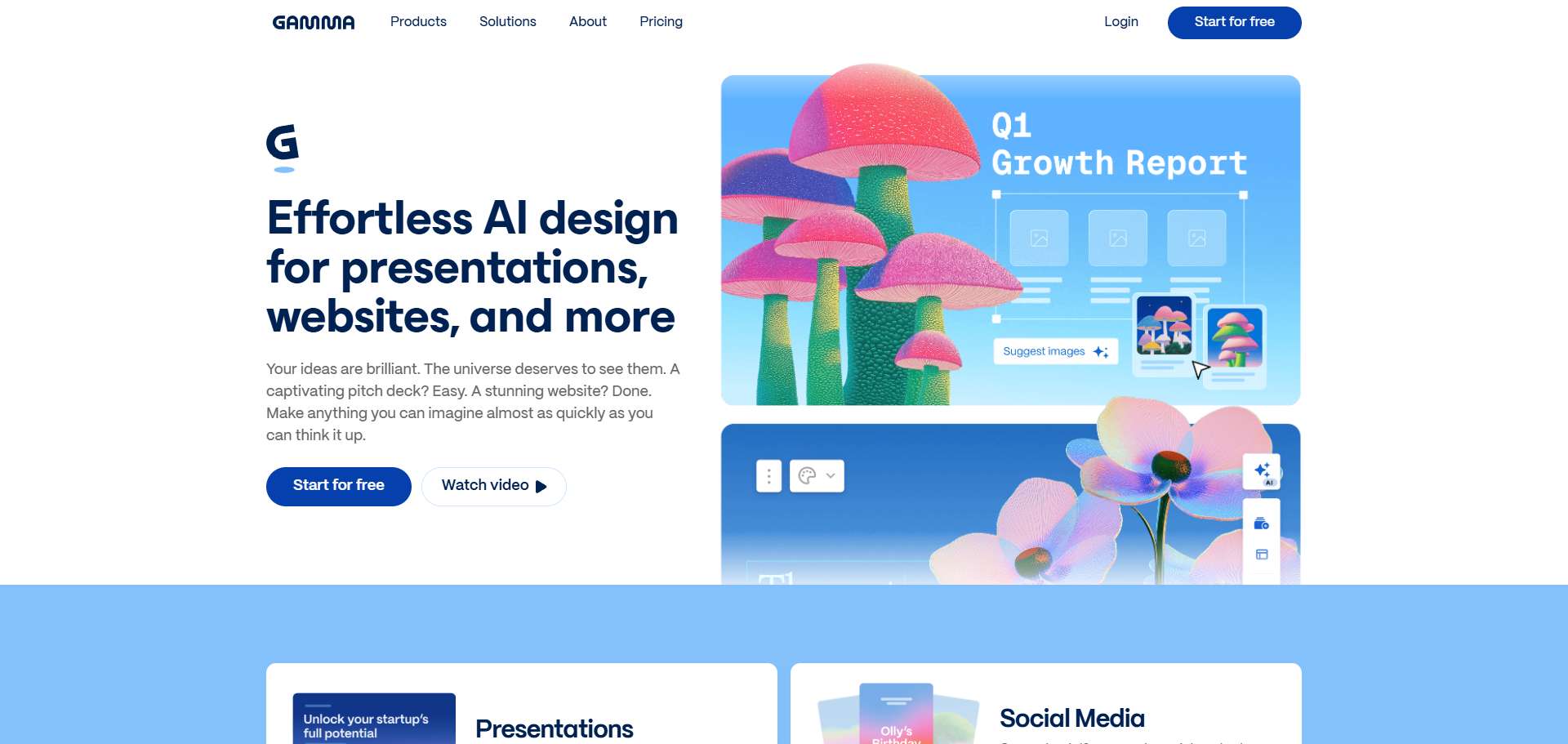
Gamma — the San Francisco AI-powered visual communication platform founded in 2020 by Grant Lee, James Fox, and Jon Noronha (all former Optimizely colleagues), having raised $68 million in Series B at a $2.1 billion valuation led by Andreessen Horowitz in November 2025, crossing $100 million in ARR with 70 million users and 1 million pieces of content created daily, while remaining profitable with a lean 52-person team — has built the most disruptive SaaS product website in the Bay Area’s productivity software market. The homepage positions Gamma not as a slide deck tool but as the replacement for PowerPoint itself, and the product delivers on that positioning: a text prompt generates a complete, professionally designed presentation in under 60 seconds, inverting the traditional presentation workflow from hours of design iteration to seconds of AI generation. The Gamma Agent — introduced with Gamma 3.0 in September 2025 — is communicated as a conversational AI partner that can research topics, restyle entire presentations, and provide design feedback through natural language, positioning the product experience well beyond any feature update into a fundamental paradigm shift in how visual content is created. The About page, listing team members as “Pet snugglers, Woodworkers, Kabbadi enthusiasts, Keyboard nerds, Music makers” communicates the cultural identity of a team building tools people love rather than enterprise software people tolerate. The freemium model — free tier that converts 46 AI-generated presentations’ worth of credits, with Plus at $8/month and Pro at $18/month — is a consumer-grade pricing architecture applied to a B2B product, generating the viral personal adoption that drives team-level and enterprise conversion.
Gusto
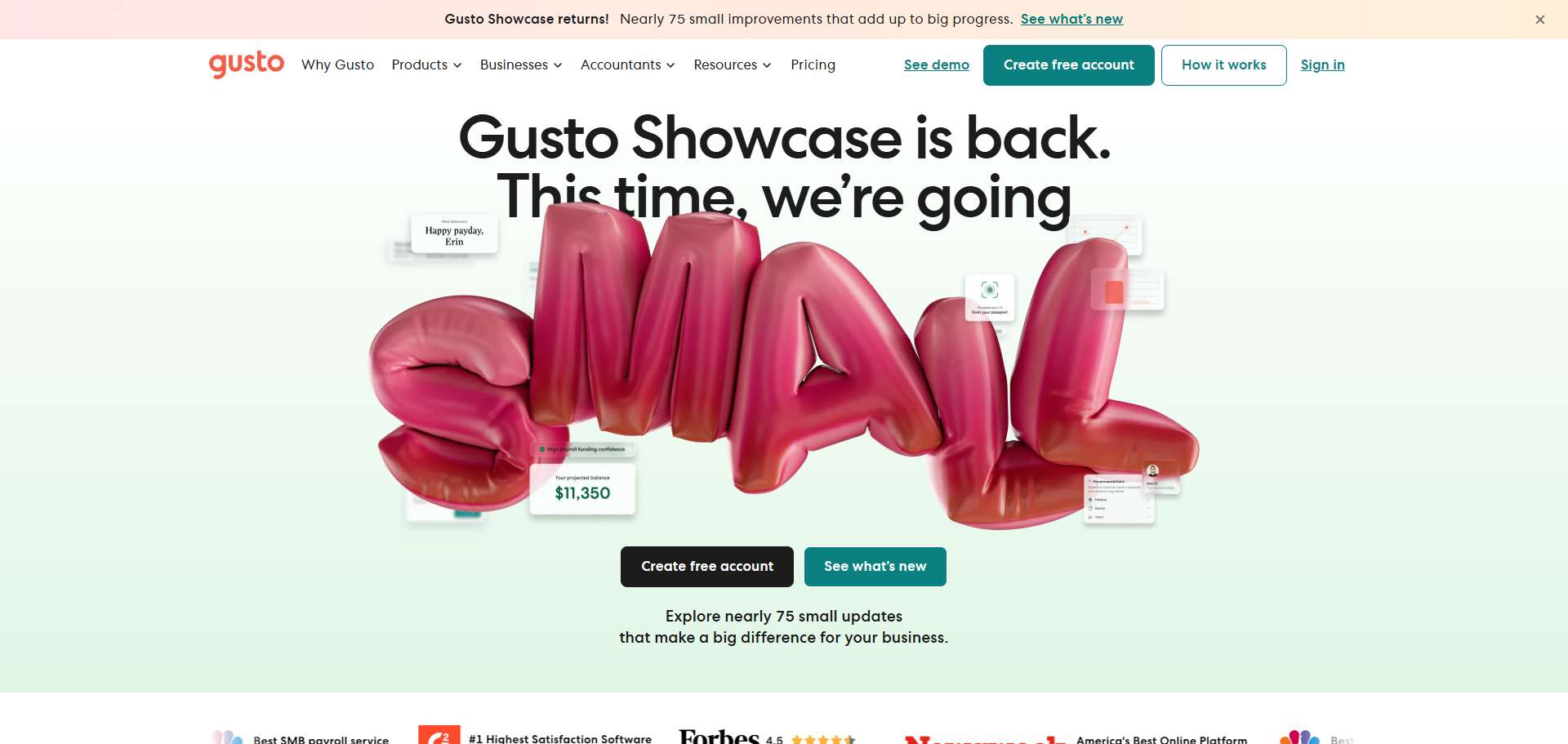
Gusto — the San Francisco cloud-based payroll and HR platform founded in 2011, serving over 300,000 small and medium-sized businesses across the United States, generating $735 million in annual revenue, named one of Time Magazine’s 100 Most Influential Companies and Fortune’s Best Workplaces for 2025, and having processed billions of dollars in payroll while expanding into health benefits, 401(k), workers’ comp, and hiring tools — has built a SaaS website that demonstrates how to convert a fundamentally unsexy product category into an emotionally resonant brand experience. The homepage positioning — “The people platform that pays” — is a masterclass in product category reframing: Gusto is not selling payroll software but a people-first philosophy where compensation, benefits, and HR are unified into a single experience that treats employees as whole people rather than headcount. The UI-forward product screenshots embedded directly in the homepage hero communicate product quality before a single feature is described, letting the clean, human-centric interface design signal the product’s ease of use to the SMB owners who evaluate software based on how intimidating it looks. The dedicated pages for each business vertical — accountants, restaurants, construction, nonprofits, healthcare, and retail — communicate the depth of industry-specific configuration that makes Gusto more than a generic payroll processor. The partner ecosystem page — showcasing 200+ accounting firm partners and software integrations — communicates the professional network infrastructure that Bay Area accountants and CPAs use to evaluate whether to recommend a payroll platform to their SMB clients, which is the referral channel that drives a meaningful share of Gusto’s new customer acquisition.
Postman
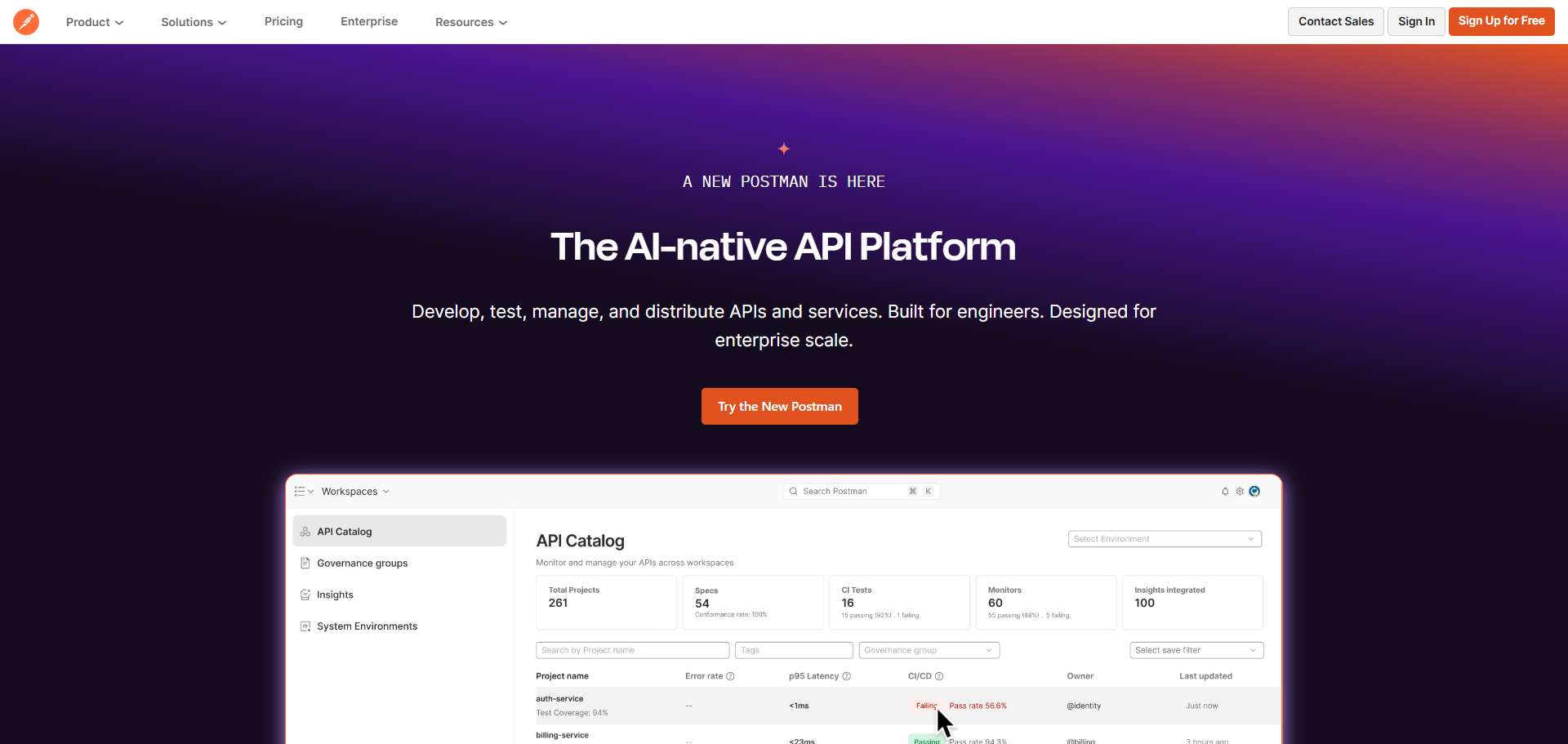
Postman — the San Francisco API development platform founded in 2014, generating $313 million in annual revenue with 35 million+ developers and 500,000+ organizations as customers, backed by Insight Partners and Coatue with $433 million in total funding, and operating the world’s largest API repository with 75,000+ public APIs available through the Postman Public API Network — has built the most developer-community-centric SaaS website in the Bay Area, deploying the Postman Public API Network as both a product feature and a marketing asset simultaneously. The API Network section of the site — giving any developer immediate access to 75,000+ public APIs from companies including Twitter, Stripe, Spotify, and Salesforce — creates a product-led organic discovery loop that no amount of marketing spend could replicate: developers searching for a specific API find Postman before they find anything else, and by the time they complete their API request they are already inside the Postman product experience. The workspace architecture communicated in the navigation — covering API Design, Documentation, Testing, Mocking, and Monitoring as distinct but integrated workflow stages — positions Postman not as a testing tool but as the complete API lifecycle platform, which shifts the competitive frame from “is Postman better than alternative X?” to “does alternative X support the full API lifecycle?” The Postman Student Program, the public Blog covering API trends, and the API-First World community platform extend the brand relationship into every stage of a developer’s career from learning to enterprise production — creating the longitudinal developer loyalty that drives Postman’s 500,000-organization customer base.
Demandbase
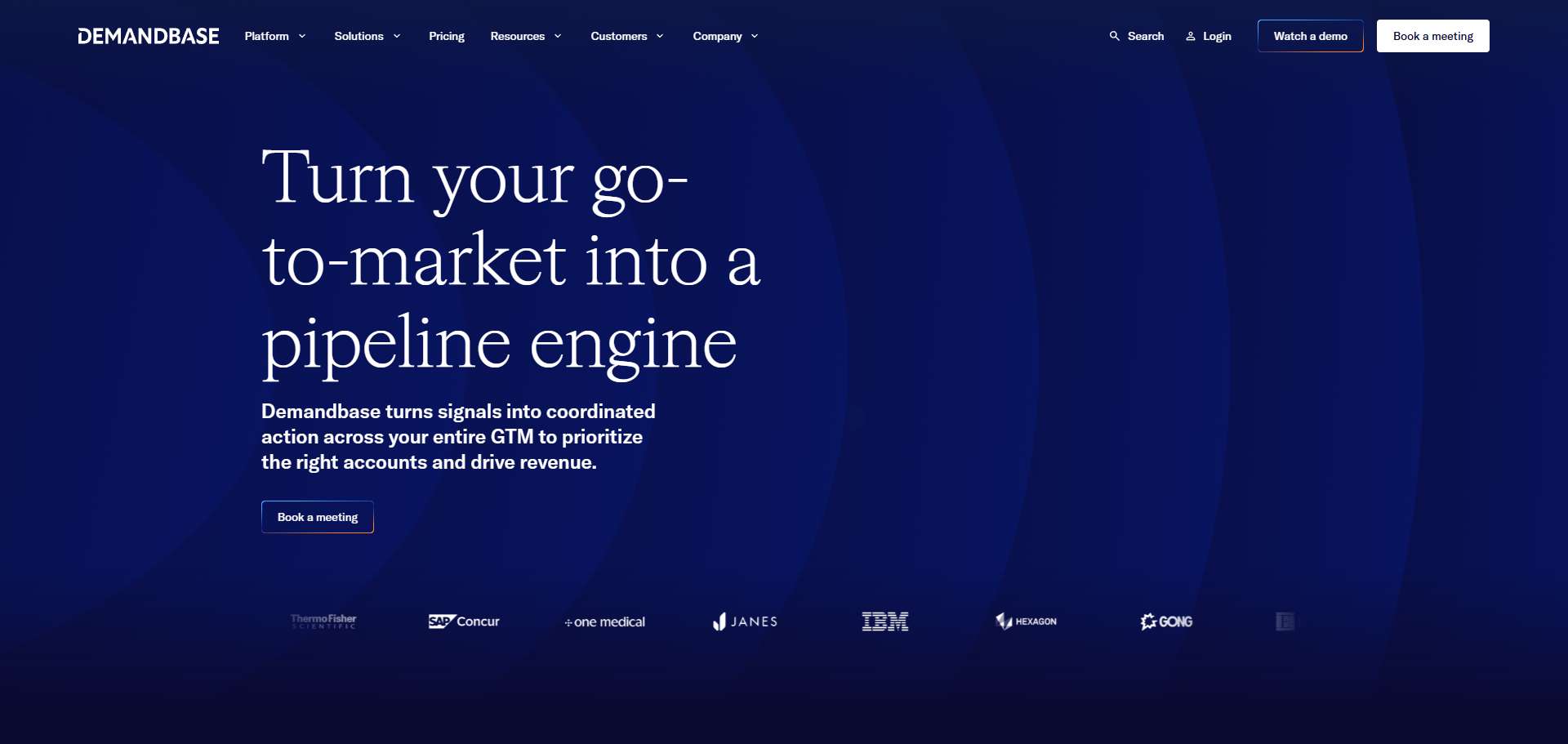
Demandbase — the San Francisco B2B marketing technology company founded in 2005, generating $750 million in annual revenue, serving as the go-to account-based marketing platform for enterprise sales and marketing teams across technology, financial services, healthcare, and manufacturing, and having pioneered the ABM category that has since become the standard operating model for enterprise B2B revenue teams — has built a SaaS website whose category authority positioning is its most powerful conversion asset. The homepage tagline — “The B2B Revenue Intelligence Platform” — communicates a category evolution from Account-Based Marketing (which Demandbase helped create and popularize) into Revenue Intelligence, a broader and more strategically elevated platform identity that positions the company at the center of the entire B2B revenue function rather than just the marketing team. The platform architecture communicated in the navigation — spanning Advertising, Data, Sales Intelligence, and Analytics — communicates the full-funnel coverage that enterprise revenue teams require from a single platform vendor, reducing the vendor sprawl that plagues B2B go-to-market operations. The ABM Certification program, the Demandbase Benchmark Report, and the B2B Ignite event platform embedded in the Resources navigation position Demandbase as the educational authority on account-based revenue generation — giving the company a content and community flywheel that drives organic pipeline through thought leadership rather than paid acquisition alone. The “Start for Free” CTA paired with “Get a Demo” serves both the self-qualified enterprise prospect and the exploratory buyer simultaneously, communicating the confidence that $750M revenue and 17+ years of category leadership justify.
From a category-creating AI email platform in San Francisco, to a vertical SaaS built exclusively for entertainment productions in San Mateo, to an enterprise water risk platform backed by global consumer brands — every SaaS website above converts because it speaks with surgical precision to a specific customer type rather than trying to appeal to everyone. If your SaaS company is based in the Bay Area — San Francisco, Dublin, San Mateo, Milpitas, or anywhere across Silicon Valley — KO Websites builds SaaS websites with the positioning clarity, conversion architecture, and local SEO structure that turns product-qualified visitors into signed customers. Contact us today for a free consultation.
What Sets Our SaaS Website Design Apart
Conversion-Optimized User Funnels
We architect sophisticated user journeys that guide prospects from initial awareness to paid subscriptions. Our web design approach incorporates behavioral psychology and SaaS-specific conversion strategies, creating seamless paths from free trials to enterprise accounts.
Technical Complexity Made Simple
Transform complex APIs and enterprise features into compelling visual narratives. Our designers excel at making sophisticated software appear intuitive and accessible, using interactive demos and clear value propositions that resonate with decision-makers across San Francisco and Oakland markets.
Scalable Growth Architecture
Built for rapid expansion and feature evolution. Every website foundation supports A/B testing, integration capabilities, and performance monitoring essential for SaaS success. Our SEO strategies target high-value keywords that attract qualified prospects.
Proven SaaS Success Stories
Our track record speaks volumes through measurable results and client testimonials. View our comprehensive portfolio of successful SaaS transformations and discover how we’ve helped Bay Area companies achieve dramatic growth in user acquisition and revenue metrics.
Advanced Features for SaaS Success
Interactive Demo Integration
Embedded product demonstrations that showcase core functionality without requiring user registration. Prospective customers experience your platform’s value immediately, increasing trial conversion rates significantly.
Dynamic Pricing Calculators
Transparent pricing tools that help prospects understand costs and value propositions clearly. Our Silicon Valley expertise ensures pricing displays build trust rather than create confusion.
Customer Success Showcases
Strategic case studies and testimonials that address common objections and demonstrate ROI. Social proof elements are optimized for maximum credibility and conversion impact.
API Documentation Portals
Developer-friendly resources that encourage platform adoption and integration. Technical documentation becomes a powerful sales tool when presented professionally and accessibly through intuitive design.
Complete SaaS Digital Solutions
Cloud Platform Showcases: Transform complex cloud infrastructure into compelling visual stories that highlight scalability, security, and performance advantages. Our designs make enterprise-level capabilities accessible and understandable for decision-makers.
Subscription Model Optimization: Create pricing pages and signup flows that maximize conversion rates while maintaining transparency. Every element supports your specific business model whether freemium, tiered, or usage-based pricing.
API Service Presentations: Technical documentation becomes marketing gold when designed properly. We create developer portals that attract integration partners while showcasing your platform’s capabilities and ease of implementation.
Enterprise Solution Positioning: B2B SaaS requires sophisticated messaging and credibility signals. Our enterprise-focused designs build trust through case studies, security certifications, and implementation success stories.
Onboarding Experience Design: First impressions determine long-term customer relationships. We design smooth onboarding flows that reduce churn while accelerating time-to-value for new users.
Customer Support Integration: Seamless help desk integration and knowledge base design that reduces support tickets while improving user satisfaction and retention rates.
Analytics Dashboard Previews: Visual representations of reporting capabilities that demonstrate value without revealing sensitive data. Prospects understand your platform’s analytical power immediately.
Integration Marketplace Design: Showcase third-party integrations and partnerships that expand your platform’s ecosystem value. Strategic partnership displays build confidence in your solution’s completeness.
Explore our successful SaaS transformations to see these strategies in action.
Serving Bay Area SaaS Innovation Hubs
From San Francisco’s SOMA district to Silicon Valley’s innovation corridors, we understand the unique demands of Bay Area SaaS companies. Our San Francisco web design expertise extends throughout the region’s tech ecosystem. Whether you’re scaling in Oakland, expanding from San Jose, or establishing presence in Pleasanton, our local market knowledge drives results. We serve innovative companies across Livermore, San Ramon, San Leandro, and Castro Valley, bringing deep understanding of regional market dynamics and competitive landscapes.
Comprehensive Digital Growth Solutions
Beyond exceptional website design, we provide integrated marketing solutions that accelerate SaaS growth. Our PPC management services target high-intent prospects actively searching for solutions like yours, maximizing ROI through precise keyword targeting and conversion optimization. Strategic social media marketing builds thought leadership and community engagement essential for SaaS brand building. Professional video production transforms complex features into compelling demonstrations that drive trial signups. Our managed hosting solutions ensure optimal performance and security, while local search optimization increases visibility among Bay Area prospects seeking innovative software solutions.
SaaS Web Design Questions Answered
How do you handle complex SaaS pricing structure presentations?
We create intuitive pricing matrices that simplify complex subscription models without hiding important details. Our approach uses progressive disclosure, allowing prospects to explore options gradually while maintaining transparency that builds trust and reduces sales cycle friction.
What strategies work best for reducing SaaS trial-to-paid conversion rates?
Strategic onboarding design combined with value demonstration throughout the trial period. We implement progress tracking, achievement milestones, and contextual upgrade prompts that guide users toward full subscription commitment naturally.
How can our website effectively communicate technical capabilities to non-technical decision makers?
Through layered content architecture that presents benefits first, then supporting technical details. We use analogies, visual metaphors, and outcome-focused messaging that translates complex functionality into business value propositions executives understand immediately.
What security and compliance elements should SaaS websites prioritize?
Enterprise prospects expect visible security certifications, compliance badges, and detailed privacy policies. Following Google’s best practices, we integrate trust signals strategically without overwhelming the user experience or conversion flow.
How do you optimize websites for both self-service and enterprise sales models?
Dual pathway design that accommodates different buyer preferences. Self-service users access immediate signup flows and self-guided resources, while enterprise prospects find sales contact options, demo scheduling, and detailed implementation information.
What timeline should we expect for a comprehensive SaaS website redesign?
Typically 8-12 weeks depending on complexity and integration requirements. Our process includes stakeholder interviews, competitive analysis, user journey mapping, and extensive testing phases. See what our clients say about the experience in our testimonials section.
Launch Your SaaS Success Story
Ready to transform your SaaS platform into a subscription-generating powerhouse? Our proven methodology combines conversion psychology with cutting-edge design to create websites that educate prospects, demonstrate value, and drive sustainable growth. Don’t let competitors capture market share while your website underperforms. Schedule your strategy session today and discover how the right digital foundation accelerates every aspect of your SaaS business growth trajectory.