Professional E-Commerce Company Websites Built to Sell Around the Clock
Custom online stores for Bay Area brands that load fast, earn trust on the first visit, and turn product pages into a steady stream of orders
Best E-Commerce Company Websites: Bay Area Online Stores That Turn Visitors Into Repeat Buyers
E-commerce websites carry a responsibility that most business websites never face: the website itself has to close the sale. There is no salesperson to answer questions, no fitting room, and no chance to hold the product before buying. The best e-commerce companies in the Bay Area solve this by replacing those in-person moments with smart digital ones: product stories that explain why something costs what it costs, configurators and subscriptions that make buying personal, guarantees that lower the risk of a first purchase, and loyalty programs that bring customers back. The California online stores below cover fashion, bags, home goods, food, flowers, coffee, and beauty, and each one shows a specific strategy that KO Websites can bring to your own store.
Cuyana
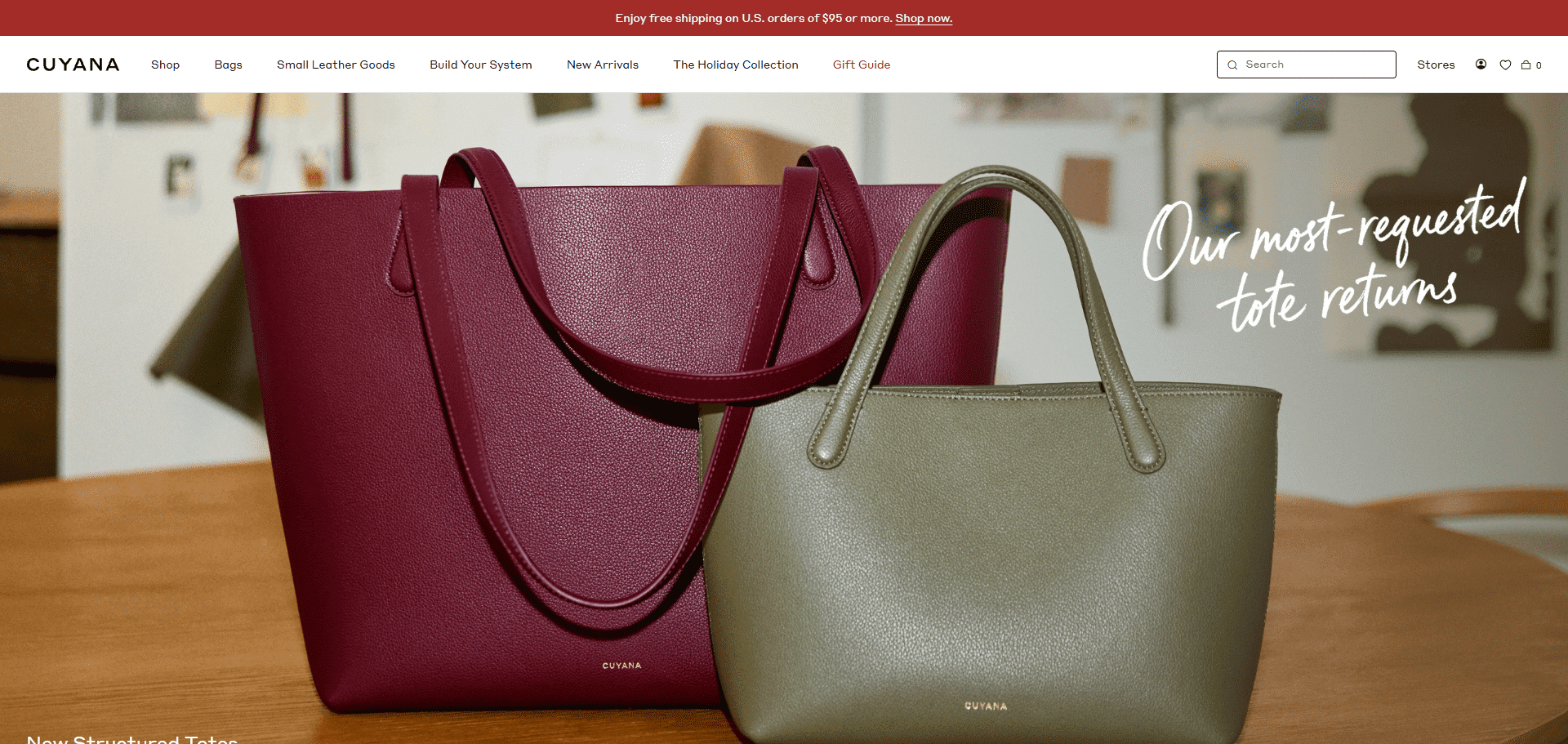
Cuyana — the San Francisco fashion and accessories brand founded in 2011 by Karla Gallardo and Shilpa Shah — built its online store around a philosophy that sounds counterintuitive for e-commerce: fewer, better things. Instead of pushing shoppers toward more purchases, the website invites them to buy carefully, choosing timeless leather bags, silk, cashmere, and wardrobe essentials meant to last for years. That positioning gives every product page a job beyond showing a photo and a price: it has to communicate craftsmanship, materials, and origin well enough to justify a premium purchase online. Cuyana started as a digital-only brand and has highlighted where and how its products are made, which turns product sourcing into a trust-building story rather than a footnote. The design is calm and minimal, with neutral tones, generous white space, and editorial photography that lets the product breathe. The brand later expanded into physical stores, a reminder that a strong online store can become the foundation for an omnichannel business. For any Bay Area e-commerce brand that sells on quality rather than discounts, Cuyana shows how restraint and storytelling can sell more effectively than urgency.
Marine Layer
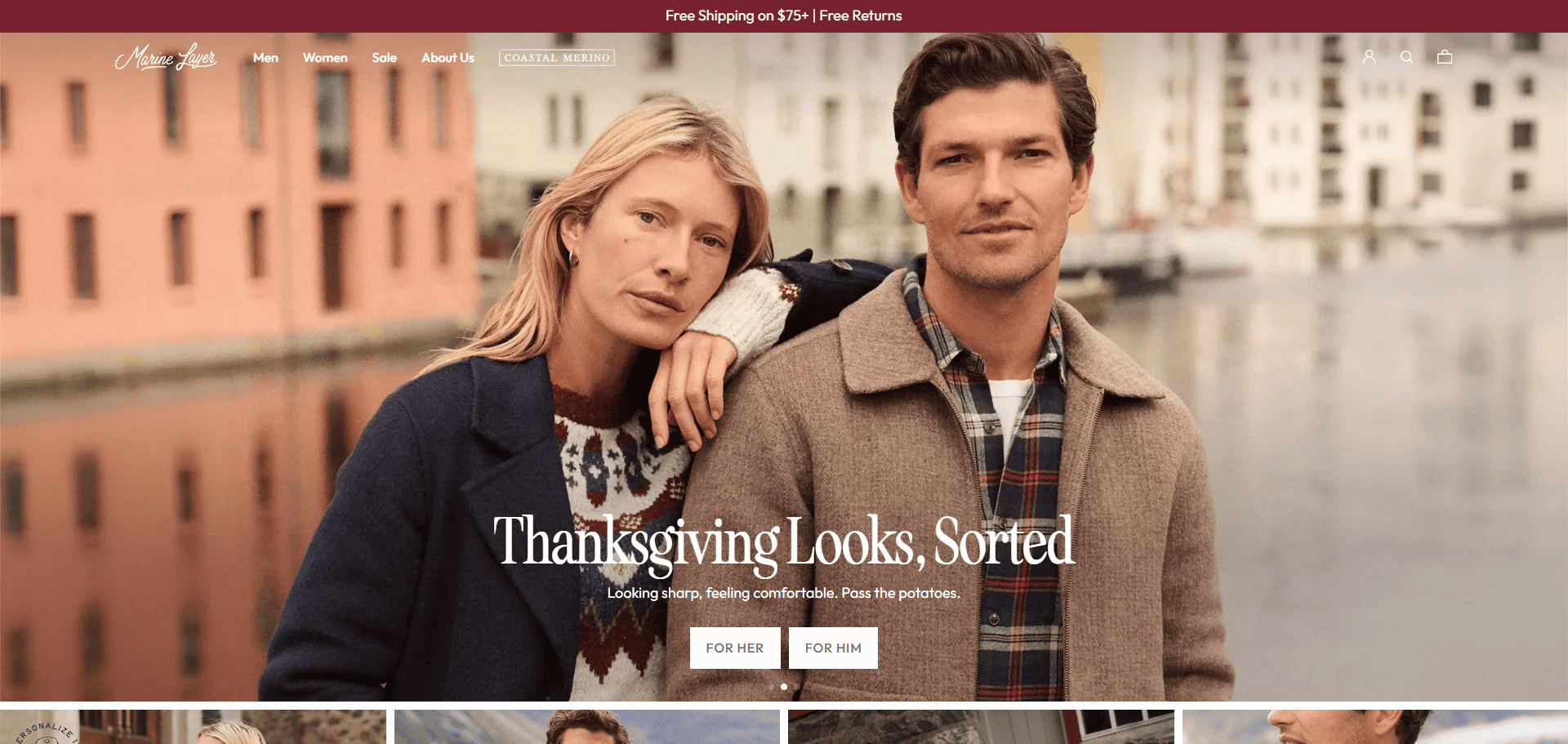
Marine Layer — the San Francisco casual apparel brand founded in 2009 and known for remarkably soft clothing — has turned a single sensory promise into an entire e-commerce identity. Because softness is hard to prove through a screen, the website leans on fabric names, material explanations, and relaxed lifestyle photography that help shoppers imagine how a shirt will feel before it arrives. The standout feature is Re-Spun, a take-back program that lets customers send in used clothing in exchange for store credit, with the recovered fibers spun into new garments. That program does something every online store wants: it gives existing customers a reason to come back and buy again, while reinforcing the brand’s sustainability commitment, which is backed by its B Corp certification. The website keeps navigation simple for men’s and women’s collections, so returning customers can quickly reorder favorites in new colors. For Bay Area e-commerce companies looking for a retention strategy that feels generous rather than salesy, Marine Layer shows how a recycling or trade-in program can double as a loyalty engine.
Timbuk2
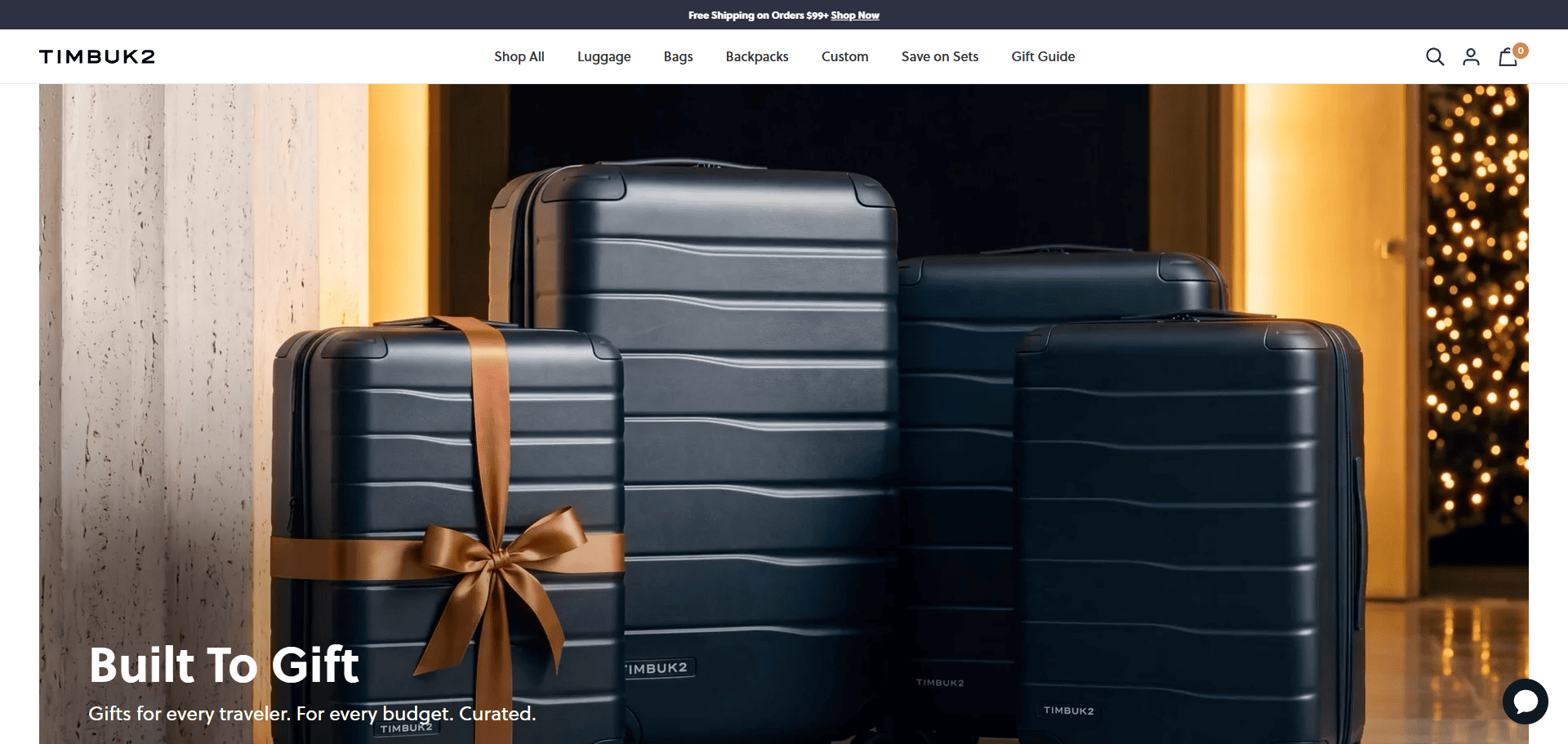
Timbuk2 — the San Francisco bag company founded in 1989 by bike messenger Rob Honeycutt — is one of the earliest examples of an online store that turned customization into its signature. The brand introduced an online bag builder around 2000, long before product configurators became common in e-commerce, letting shoppers choose fabrics, colors, panels, and features to design a messenger bag or backpack that is genuinely their own. A configurator changes the psychology of buying: instead of comparing a product against competitors, the shopper becomes invested in a design they created, which makes the purchase feel personal and much harder to abandon. Alongside the custom program, the store offers ready-to-ship backpacks, messenger bags, and travel gear organized by use, so commuters and travelers can find the right bag quickly. Durable construction and a reputation built on San Francisco’s bike messenger culture give the brand an authentic story that the website carries into every collection. For e-commerce companies that sell products with options, sizes, or personalization, Timbuk2 is proof that an interactive builder can become both a conversion tool and a brand differentiator.
Heath Ceramics
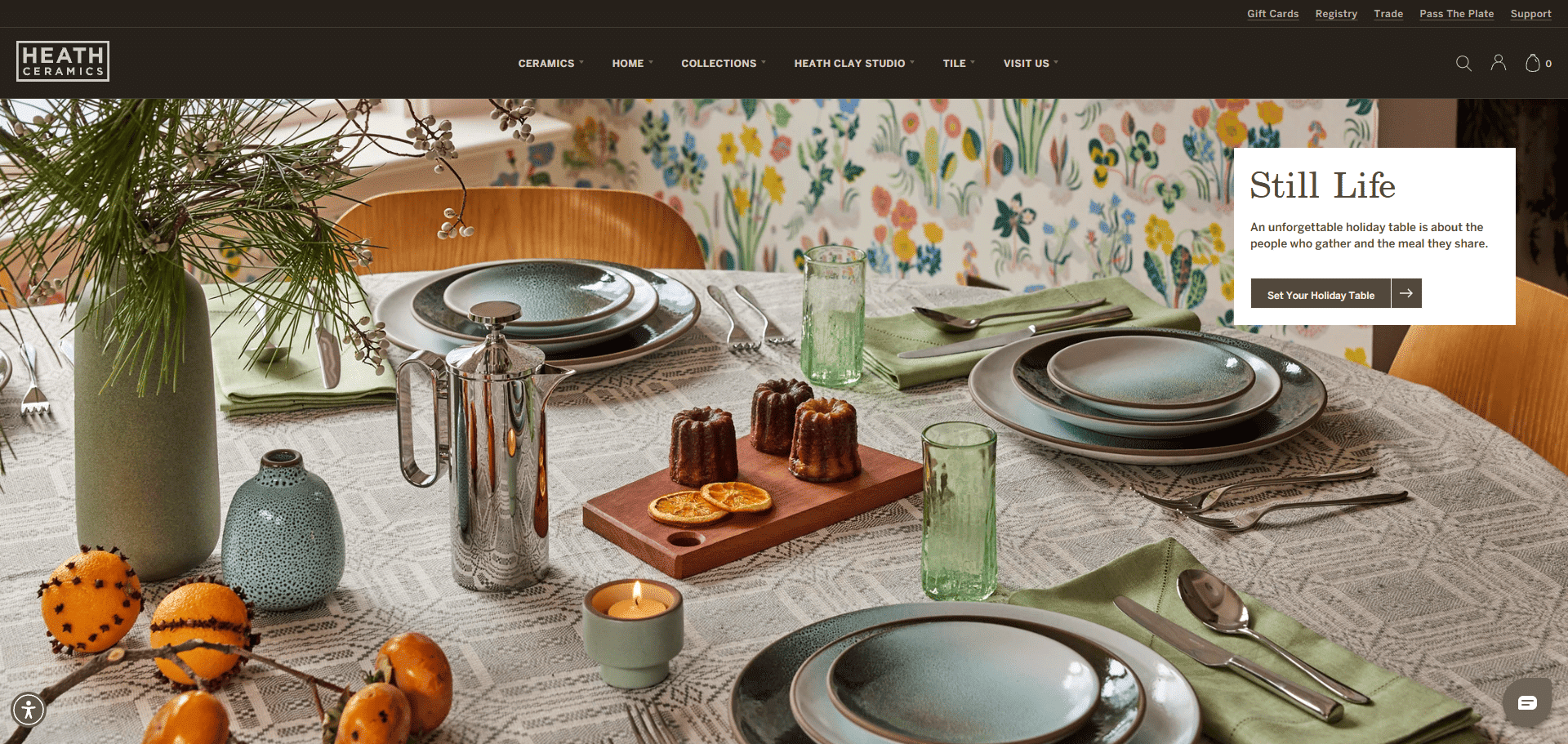
Heath Ceramics — the Sausalito dinnerware and tile maker founded in 1948 by Edith and Brian Heath — shows how a heritage manufacturer can build a modern e-commerce business without losing its craft identity. Since Catherine Bailey and Robin Petravic took over in 2003, the company has focused on selling directly to customers through its own showrooms and a robust online store, with everything designed and produced in its Bay Area factories. The website presents dinnerware the way a design-conscious buyer wants to see it: clean collection pages, consistent glazes and colorways, and photography that shows place settings in real homes rather than isolated objects. A registry feature turns the store into a destination for wedding and housewarming gifts, which brings in new customers through the people buying for them. Tile, furniture, textiles, and home objects extend the catalog naturally, increasing average order value without diluting the brand. For established Bay Area businesses with a long history and a physical location, Heath Ceramics is an excellent model for turning a legacy brand into a nationwide online store.
Dandelion Chocolate
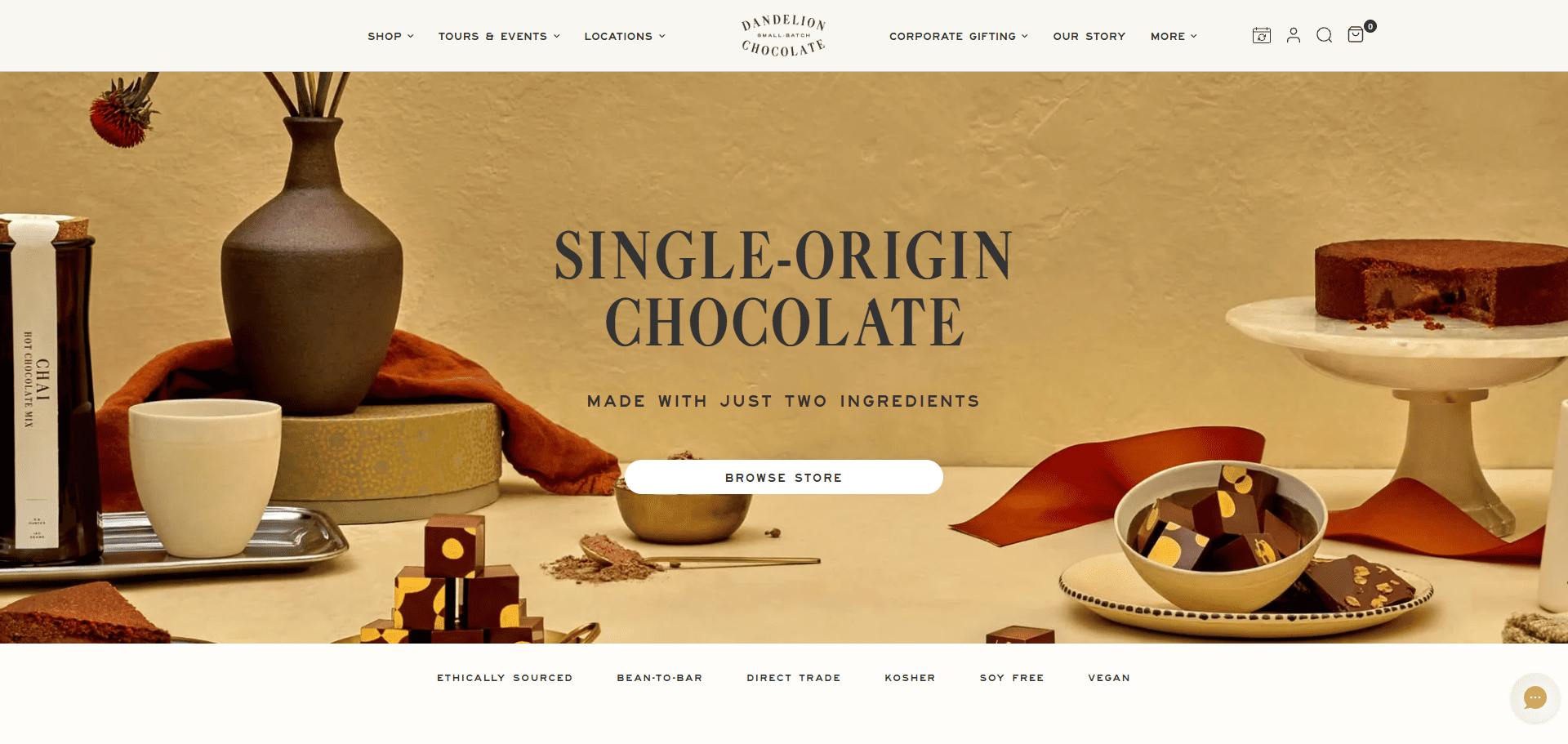
Dandelion Chocolate — the bean-to-bar chocolate maker in San Francisco’s Mission District — runs an online store that sells far more than chocolate bars. The brand’s core message fits in a phrase, chocolate made from just cocoa beans and organic sugar, and the website uses that simplicity to stand out in a category crowded with long ingredient lists and generic packaging. Single-origin bars are presented with notes about where the beans come from, which helps shoppers understand why each bar tastes different and gives them a reason to try several. Beyond products, Dandelion sells experiences: virtual chocolate classes, tastings, and factory visits turn a one-time purchase into an ongoing relationship with the brand. Gift collections and seasonal shipping options make the store especially strong during holidays, when chocolate becomes a gifting category rather than a personal treat. The site also connects online visitors with the San Francisco factory and cafe, serving both local foot traffic and nationwide orders. For food and specialty brands, Dandelion shows how education and experiences can raise the value of every product on the shelf.
Coyuchi
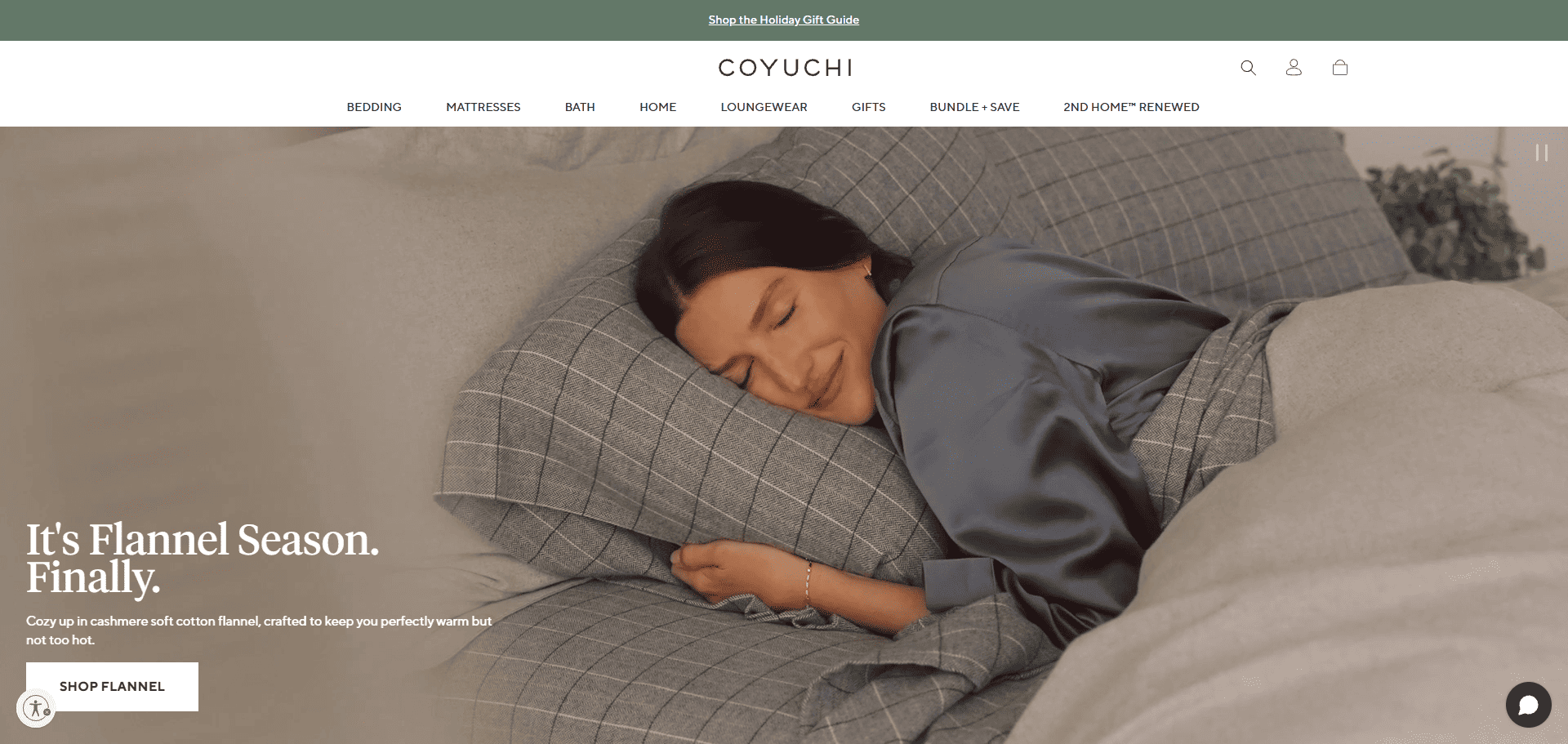
Coyuchi — the West Marin company that has made organic bedding since 1991 and opened its first store in Point Reyes Station — demonstrates how an online store can sell high-ticket home products with confidence. Sheets, duvet covers, towels, and blankets are presented with clear information about organic materials, weaves, and finishes, answering the questions shoppers usually ask in a store when they touch the fabric. The brand’s coastal-inspired aesthetic carries through soft, natural photography and an earthy palette that matches the products themselves. Coyuchi has also expanded into mattresses, where purchase risk is highest, and supports that move with a 100-night trial and free returns, guarantees that make it far easier for a shopper to commit to a large online purchase. Bundles and starter collections give first-time buyers an easy entry point into the brand. For e-commerce companies selling premium products where customers hesitate before clicking buy, Coyuchi shows how material transparency and risk-reducing guarantees can turn hesitation into a completed order.
Farmgirl Flowers
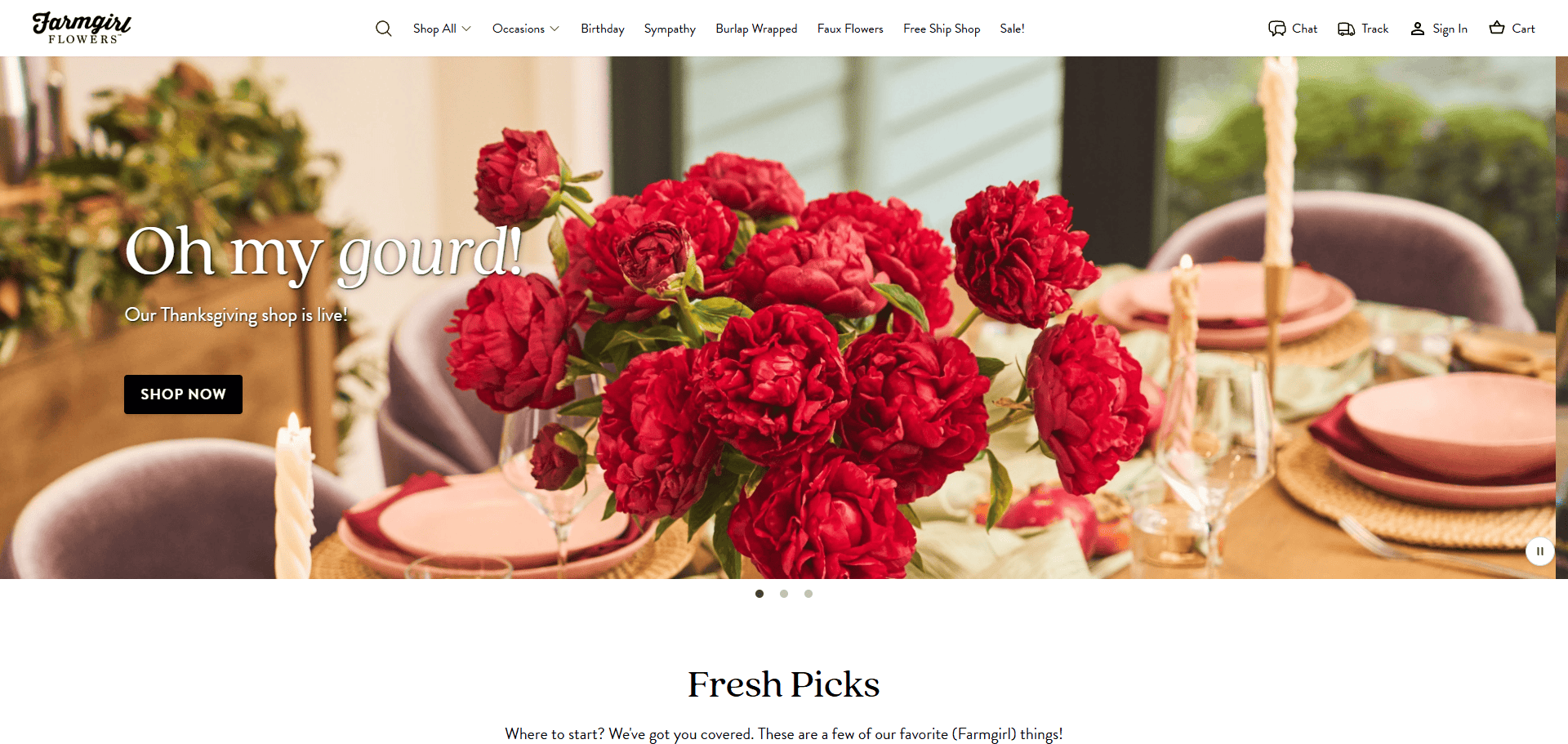
Farmgirl Flowers — the San Francisco flower company that founder Christina Stembel launched from her apartment in 2010 — grew from a local delivery service into a nationally recognized online florist. Its signature burlap-wrapped bouquet gives the brand an instantly recognizable look, and the website makes that signature the center of the shopping experience. Instead of overwhelming shoppers with endless options, the store keeps choices focused, with bouquets organized by size and occasion so customers can send flowers in just a few clicks. Add-ons such as vases, candles, sweets, and handwritten notes appear naturally during checkout, raising order value while making the gift feel more complete. Delivery information is central to the experience, combining nationwide shipping with local same-day delivery in San Francisco and nearby cities, which serves both last-minute local buyers and out-of-state gift senders. For e-commerce companies that sell gifts or time-sensitive products, Farmgirl Flowers shows how a distinctive product signature, clear delivery promises, and smart checkout upsells can build a national brand from a single city.
Sightglass Coffee
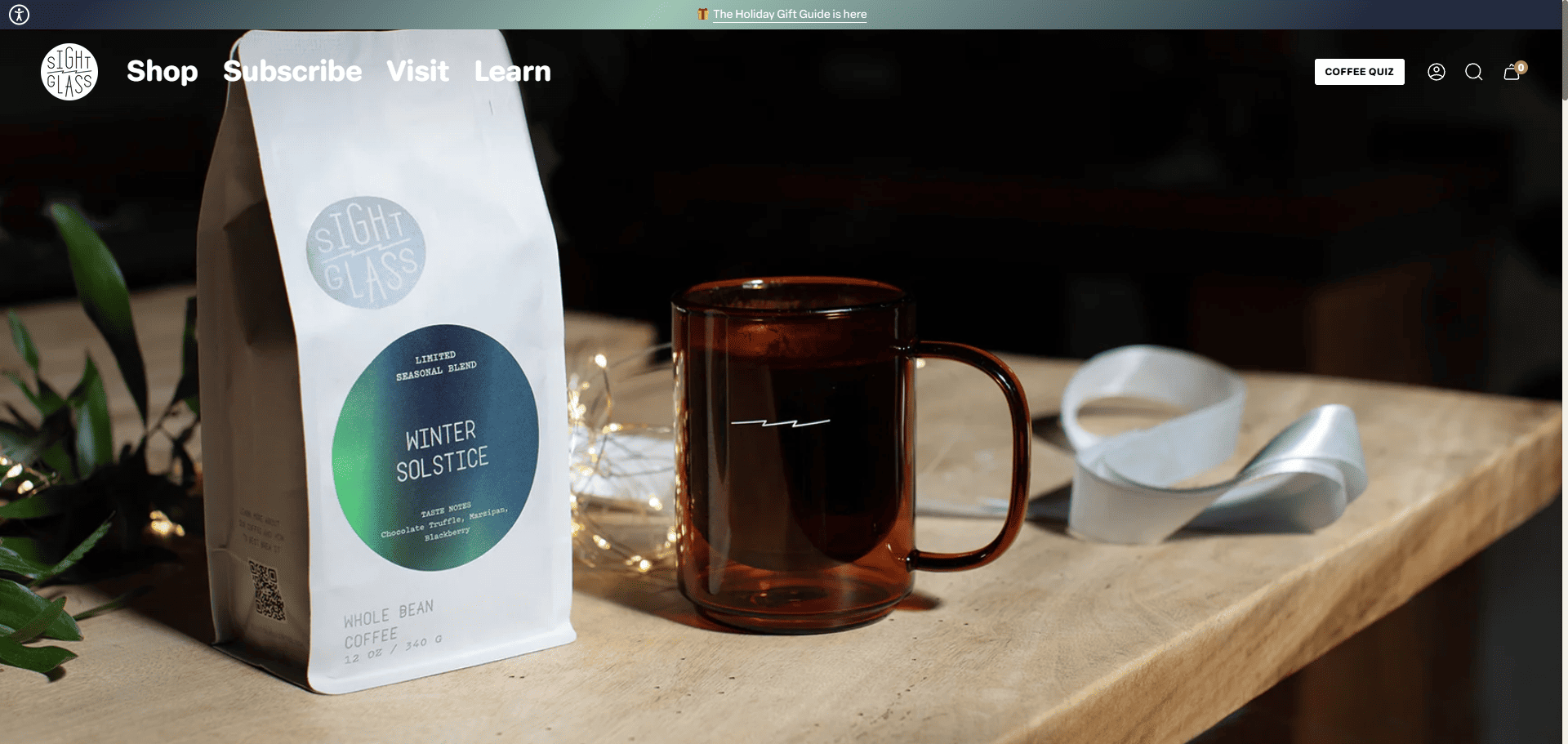
Sightglass Coffee — the sibling-owned roaster that began in 2009 in a San Francisco warehouse — combines beloved cafes with an e-commerce store built around recurring revenue. The heart of the online store is a build-your-own subscription that lets customers choose their coffee, bag size, and delivery frequency, and then manage or change it easily from their account. That flexibility matters: shoppers are more willing to subscribe when they know they are not locked in, and a subscription turns a single bag of coffee into a long-term customer relationship. Every order is roasted after it is placed, a freshness promise that gives online buyers a reason to order direct instead of picking up a bag at the grocery store. Gift sets, brewing gear, and prepaid gift subscriptions extend the store into the holiday season, while verified customer reviews add social proof at the point of decision. The website also showcases its San Francisco cafe locations, connecting local brand loyalty with national online sales. For food and beverage companies, Sightglass is a clear example of designing an online store around repeat purchases rather than one-time orders.
Rancho Gordo
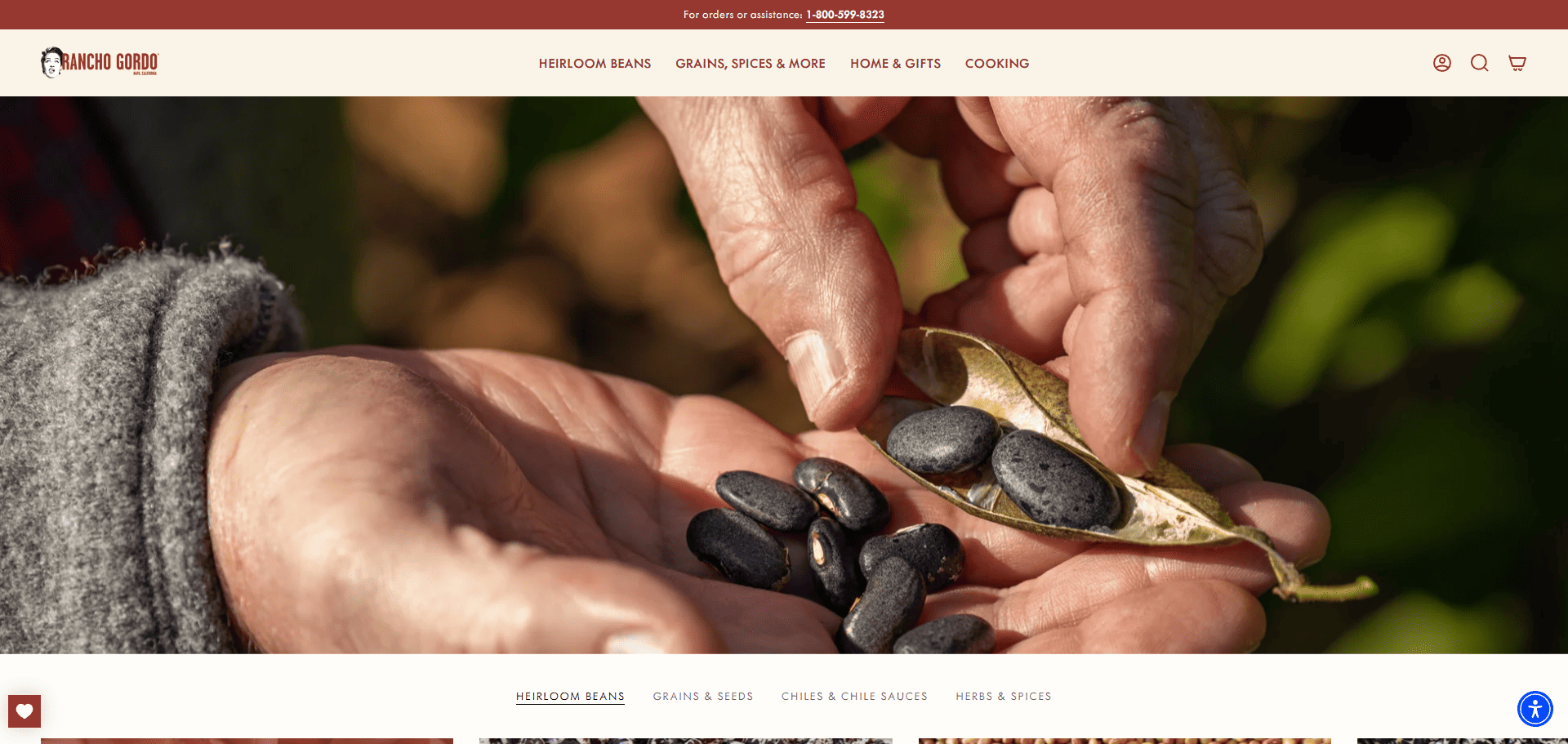
Rancho Gordo — the Napa heirloom bean company founded by Steve Sando — proves that almost any product can build a passionate online following when the story is told well. Selling directly through its own website lets Rancho Gordo explain what a supermarket shelf never could: where each variety comes from, how it tastes, how to cook it, and why heirloom beans are worth paying more for. Its work with farmers in Mexico to preserve indigenous varieties adds a meaningful mission that resonates with food lovers. The company’s best-known e-commerce asset is the Bean Club, a quarterly subscription that started almost as a joke about Napa wine clubs and grew into a membership with tens of thousands of members and a waiting list. Scarcity, member-only access to limited varieties, and recipes delivered with every box turn a pantry staple into something customers look forward to. Waitlists for sold-out beans keep demand visible instead of losing interested shoppers. For niche Bay Area brands, Rancho Gordo is a powerful case study in how a membership program and educational content can create loyalty that money cannot easily buy.
Credo Beauty
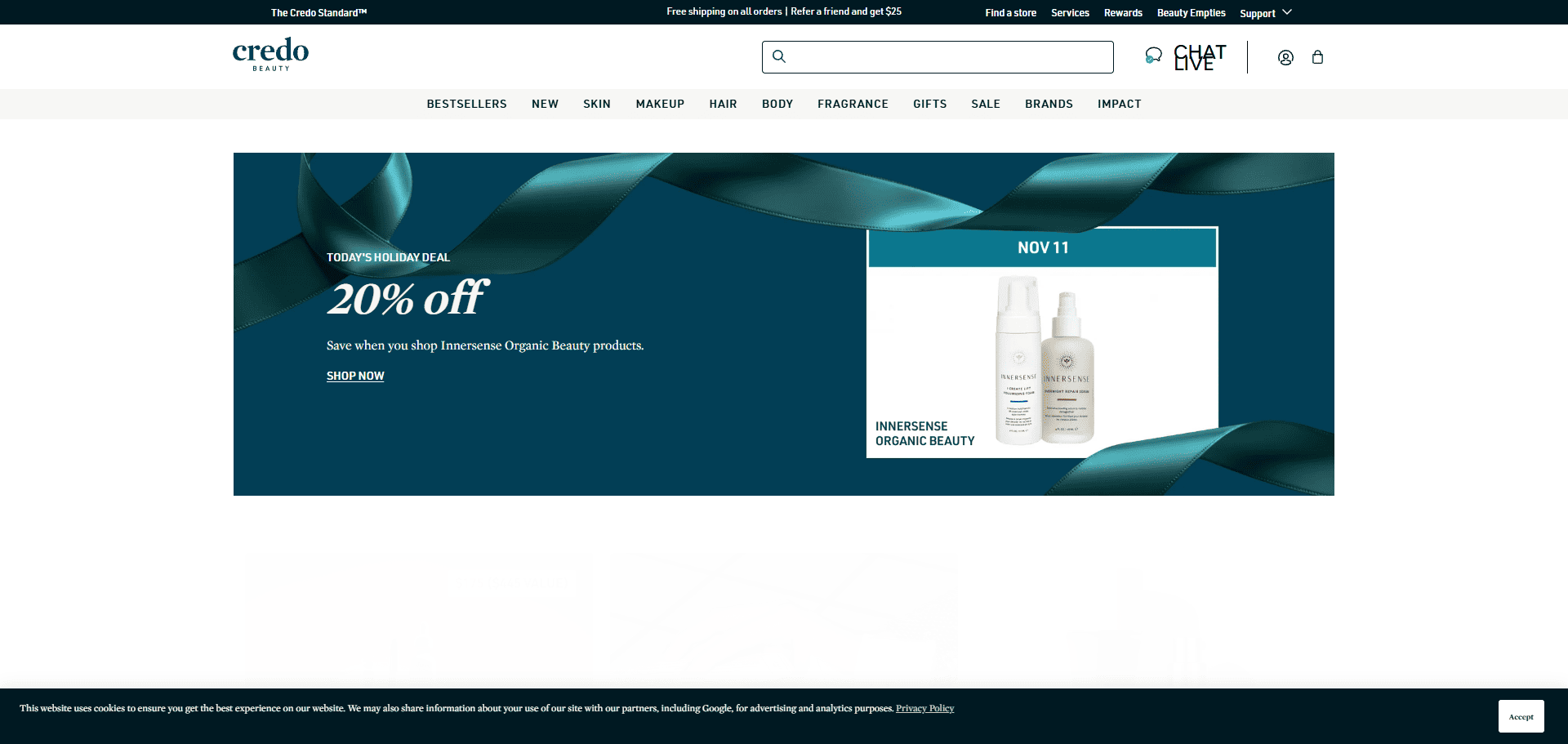
Credo Beauty — the San Francisco clean beauty retailer that opened its first store in the city — shows how a multi-brand e-commerce company can win trust in a category full of vague marketing claims. Its competitive advantage is a published standard: the Dirty List, a list of thousands of ingredients that Credo prohibits or restricts, which every brand on the platform must follow. Instead of asking shoppers to research every label themselves, the website does the vetting for them, turning the store into a trusted filter for skincare, makeup, hair care, and body products. Clear category navigation and curated brand pages help shoppers move from browsing to buying across a large catalog, while educational content explains what clean beauty means and which products to switch first. The combination of online sales and physical stores in several U.S. cities strengthens the brand’s credibility and gives customers multiple ways to buy. For e-commerce companies that curate products from other brands, Credo demonstrates how a clear, public standard can become the main reason customers choose one store over another.
From a San Francisco fashion label built on fewer, better things, to a Napa bean company with a subscription waiting list, to a clean beauty retailer that vets every product for its customers — every e-commerce company website above succeeds because it removes doubt at the exact moment a shopper is deciding whether to buy. If your online store is based in San Francisco, Oakland, Marin, the Peninsula, the South Bay, or anywhere across the Bay Area, KO Websites builds e-commerce websites with the same product storytelling, smooth checkout, and loyalty features, plus the local search structure that keeps new customers finding you. Contact us today for a free consultation.
Why Bay Area Online Stores Choose KO Websites
Product Pages Designed to Sell
Every product page answers the questions a shopper would ask in a store: what it is made of, how it fits or works, what it costs to ship, and when it will arrive. Clear photography, benefit-driven descriptions, and visible buy buttons are core to our web design approach.
Mobile Commerce First
Most online shoppers browse and buy on their phones. We design for the smallest screen first, with fast load times, thumb-friendly navigation, and mobile checkout, through our responsive web design and mobile web design and marketing services.
Payments and Checkout Done Right
We handle the technical side of selling online, from cart setup and payment gateways to tax and shipping rules, through our shopping carts, stores, and merchant accounts service, so your store is ready to take orders on day one.
Proven Bay Area Success
Our client testimonials reflect years of building websites for Bay Area businesses. We pair store design with SEO strategy so your products are found in search, not just admired by visitors who already know you.
Advanced Features for E-Commerce Success
Frictionless Checkout
Guest checkout, saved carts, digital wallets, and transparent shipping costs reduce cart abandonment. We build checkout flows with as few steps as possible, so buying feels effortless on any device.
Subscriptions, Memberships, and Clubs
Recurring deliveries, member pricing, and product clubs turn one-time buyers into steady monthly revenue, with self-service account tools that let customers pause, skip, or change orders easily.
Product Configurators and Personalization
Custom options, product builders, engraving, gift notes, and bundles let shoppers make a product their own, increasing both conversion rates and average order value.
Reviews, Guarantees, and Trust Signals
Verified reviews, return policies, trial periods, and security badges are placed where doubt is highest, near prices and buy buttons, and supported by managed hosting and website management that keeps your store fast and secure.
Complete E-Commerce Digital Solutions
New Online Store Launches
Complete online stores built from the ground up, including product catalog setup, payment processing, shipping configuration, and merchant account setup, ready to sell from launch day.
E-Commerce Redesigns and Migrations
Modern redesigns for stores that look outdated or convert poorly, with careful migration of products, customers, orders, and URLs to protect the search rankings you have already earned.
Fashion, Apparel, and Accessories
Style-led navigation, size guides, color selection, and lookbook photography that help shoppers buy clothing and accessories online with confidence.
Food, Beverage, and Specialty Products
Product storytelling, gift sets, seasonal shipping, and subscription programs for brands that sell coffee, chocolate, pantry goods, and other specialty foods. For restaurants specifically, see our restaurant website design.
Home Goods, Gifts, and Lifestyle
Room-inspired collections, gift registries, and gift-ready checkout options for brands selling home products, flowers, and lifestyle goods.
Custom Features and Budget-Friendly Starts
Product builders, member portals, and custom integrations through custom app development and AI web design, plus low-cost web design and small business website design options for new brands ready to start selling online.
View our complete website portfolio to see these strategies in action.
Serving E-Commerce Companies Across the Bay Area
From San Francisco and Oakland to San Jose and Silicon Valley, we help Bay Area brands sell online to customers across the country. Our East Bay reach includes Berkeley, Alameda, Hayward, Fremont, Union City, San Leandro, Castro Valley, Pleasanton, Livermore, and San Ramon. In the North Bay, we also serve Marin County and Sonoma County. See our complete service areas.
Comprehensive Growth Solutions for Online Stores
A beautiful store still needs shoppers. Our SEO services help your product and category pages rank for the searches your customers make, while local search optimization supports brands with showrooms, cafes, or pickup locations. Targeted PPC management puts your products in front of shoppers ready to buy, and social media marketing – including San Francisco social media marketing – builds the audience and community that drive repeat sales. Video production brings products to life, professional content writing and blogs support organic growth, and our website management keeps your store fast, secure, and up to date.
E-Commerce Website Questions Answered
What makes an e-commerce company website different from a regular business website?
A regular business website generates leads, while an e-commerce website has to complete the sale on its own. That requires detailed product pages, a secure cart and checkout, payment processing, shipping and tax rules, inventory management, and order emails, all designed to work smoothly together.
Which e-commerce platform is right for my business?
It depends on your catalog size, budget, and the features you need, such as subscriptions, product configurators, or wholesale pricing. We evaluate your goals and recommend the platform that fits, then set up your shopping cart and merchant account correctly from the start.
How do you reduce abandoned carts?
We show shipping costs early, offer guest checkout and digital wallets, shorten forms, and place reviews, guarantees, and return policies near the buy button. Speed matters too, because slow pages lose shoppers before they ever reach the cart.
Can you add subscriptions, memberships, or product personalization?
Yes. We build recurring subscriptions, membership clubs, gift registries, bundles, and product customization options, with account tools that let customers manage their own orders.
How long does it take to build an e-commerce website?
Most online stores take roughly 8 to 12 weeks, depending on the number of products, integrations, custom features, and content readiness. Large catalogs or migrations from another platform can extend the timeline. We outline a clear schedule during the strategy call.
Will my online store be optimized for search engines?
Yes. We structure categories, product pages, URLs, and metadata for search from the beginning, and follow Google’s guidance on helpful, people-first content. Ongoing SEO services help your products keep climbing in search results after launch.
Launch an Online Store That Sells While You Sleep
Every day your store loads slowly, confuses shoppers, or hides important details, potential customers are buying from someone else. Your products deserve an e-commerce website that tells their story clearly, makes checkout effortless, and brings customers back again and again. Our proven approach combines conversion-focused design, reliable payment setup, and Bay Area market knowledge to grow your online sales consistently.